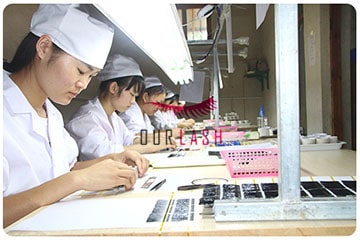
Today, OURLASH will talk about Why Southeast Asian False Eyelash Manufacturers Can’t Compete with China Despite Cheaper Labor.
Southeast Asia, with its abundant low-cost labor force (20–30% cheaper than China’s coastal regions), seems primed to dominate labor-intensive beauty products like false eyelashes. Countries like Vietnam, Indonesia, and Thailand have invested in lash manufacturing, yet China maintains over 70% of global market share, with Pingdu alone producing 70% of the world’s false eyelashes. This paradox reveals that labor costs are just one piece of the manufacturing puzzle—China’s overwhelming advantages in industrial ecosystems, supply chain integration, quality consistency, and innovation create a competitive moat that Southeast Asian producers cannot bridge.
The Unmatched Power of Industrial Clustering
China’s false eyelash industry thrives in hyper-concentrated industrial clusters, most notably Pingdu in Shandong Province, known as the “Eyelash Capital of the World”. This small city hosts over 5,000 manufacturers and 20,000 processing facilities producing more than 3,000 lash styles within a 50-kilometer radius. Every production component—from PBT synthetic fiber suppliers to adhesive makers, packaging designers, and logistics firms—operates in close proximity, reducing transaction costs by 30% compared to fragmented competitors.
In contrast, Southeast Asian production remains scattered. Even in Vietnam’s emerging lash hubs, factories are isolated, forcing businesses to import raw materials from China, machinery from South Korea, and adhesives from Thailand. This geographic dispersion creates bottlenecks: during Vietnam’s 2025 rainy season, port congestion delayed Chinese fiber shipments by 12 days, halting production for many local factories. Pingdu’s ecosystem allows manufacturers to source materials within hours, not weeks, enabling rapid response to market trends.
Complete Supply Chain Integration: Beyond Labor
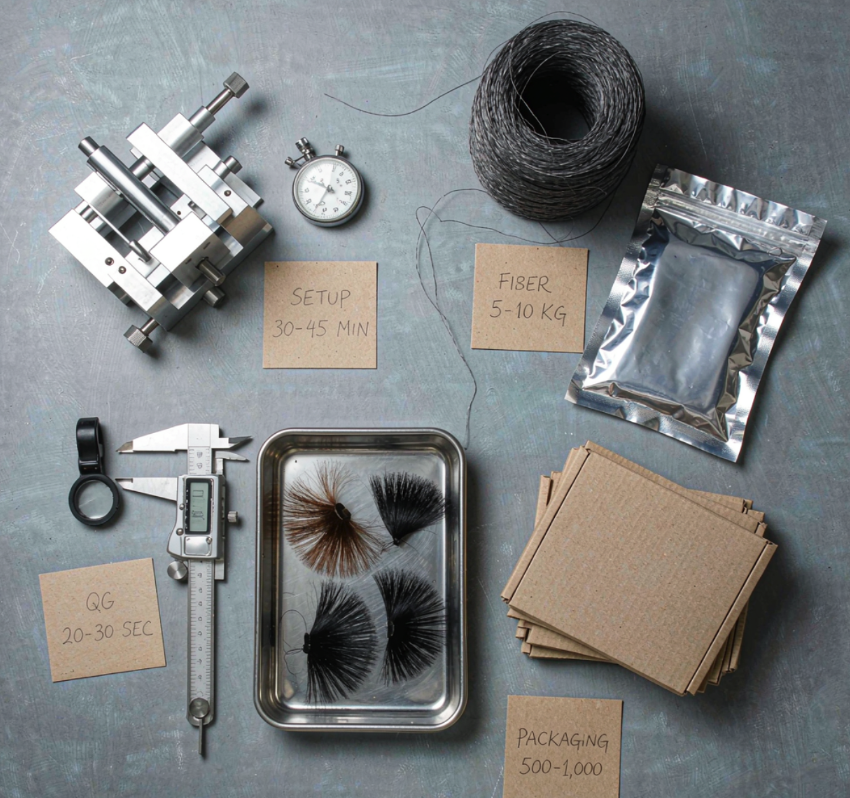
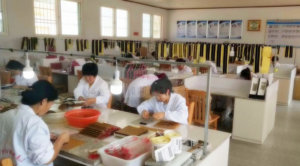
False eyelash production involves 10+ specialized steps—fiber processing, band cutting, fan assembly, curl setting, and packaging—each requiring precision materials. China controls the entire value chain: Zhejiang Province supplies 60% of the world’s lash fibers, while Guangdong manufacturers produce medical-grade adhesives and ultra-thin lash bands. Long-term partnerships (averaging 4.3 years) between Chinese suppliers and manufacturers ensure stable quality and pricing, eliminating supply chain disruptions.
Southeast Asian manufacturers face critical supply gaps. Most still rely on imported Chinese PBT fibers, the core material for synthetic lashes, and lack domestic capacity for specialized components like magnetic strips or self-adhesive bases. This dependency creates cost inefficiencies: Vietnamese factories pay 15–20% more for raw materials than their Chinese counterparts, negating labor cost advantages. China’s vertical integration extends from fiber extrusion to finished product, reducing lead times from 45 days (Southeast Asia) to 15–20 days, a decisive edge in the fast-changing beauty industry.
Skilled Labor and Quality Consistency
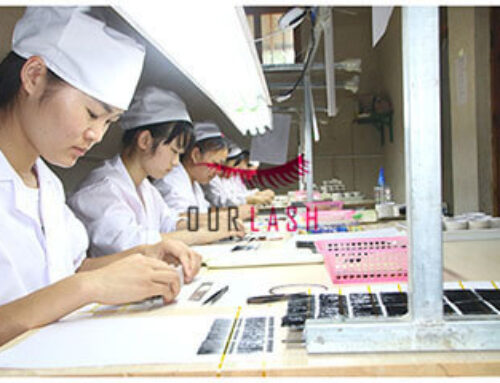
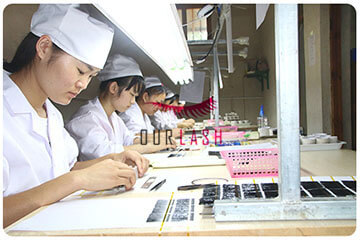
While Southeast Asia offers lower basic wages, Chinese workers bring specialized expertise honed over decades. Pingdu’s artisans undergo 6–12 months of training in hand-tied techniques, volume fan creation, and custom curl patterns—skills critical for producing high-quality, long-lasting lashes. These workers achieve 98% consistency in lash length and curl, compared to 85% for Southeast Asian counterparts, according to industry quality audits.
Quality control remains a persistent challenge for Southeast Asian producers. Smaller workshops often cut corners to compete on price, resulting in uneven lash band thickness, poor adhesive quality, and premature shedding—problems that erode consumer trust. China’s mature industry has implemented strict international standards (EU REACH, US FDA guidelines), with top manufacturers investing in automated inspection systems that detect defects at 0.1mm precision. For Southeast Asian retailers serving discerning customers, this consistency justifies paying slightly higher prices for Chinese products.
Technological Innovation and Product Diversity
China’s lash industry has evolved from basic manufacturing to a hub of innovation, outpacing Southeast Asian competitors in R&D investment. Chinese manufacturers lead in developing self-adhesive lashes, magnetic lashes, and easy fan volume technology—products requiring specialized production capabilities beyond the reach of most Southeast Asian SMEs. Pingdu’s factories introduce 50+ new styles monthly, from natural “clear band” designs favored in Singapore to dramatic 3D lashes popular in Indonesia.
Southeast Asian producers struggle to keep pace with rapid trend cycles. Limited design teams and smaller production runs force them to focus on basic styles, while Chinese manufacturers can quickly adapt to regional preferences. When Indonesia’s market shifted to extreme volume lashes in 2024, Pingdu factories retooled within two weeks, while Vietnamese producers took three months to catch up, losing market share in the process.

Economies of Scale and Logistics Advantages
China’s massive production volumes drive down per-unit costs despite higher labor expenses. A typical Chinese factory produces 500,000–1 million lash pairs monthly, compared to 100,000 pairs for large Southeast Asian facilities. This scale allows Chinese suppliers to offer prices 10–15% lower than Southeast Asian counterparts for comparable quality products, according to eyelash industry analysts.
Logistics further widen the gap. China’s proximity to major ports like Qingdao and Shanghai reduces shipping costs to Southeast Asia by 20% and delivery times by 30%Alibaba.co…. A 40-foot container from Pingdu to Jakarta costs $1,200 and takes 7–10 days, compared to $1,500 and 12–15 days from Vietnam. China’s established partnerships with global carriers (DHL, FedEx) and flexible incoterms provide additional advantages for international buyers.
Market Reality: Niche Roles vs. Global Dominance
Southeast Asian manufacturers have found success in budget markets, offering products 10–15% cheaper than Chinese alternatives. They also excel in serving local preferences and leveraging trade agreements like the EU-Vietnam Free Trade Agreement for tariff advantages. However, these advantages are limited to the low-end segment.
For mid-to-high-quality lashes requiring consistent quality, diverse styles, and reliable supply, Chinese manufacturers remain the preferred choice for most Southeast Asian businesses. As one Indonesian beauty retailer explained, “Local lashes are cheaper, but Chinese products have better quality control, more styles, and faster delivery—factors that ultimately boost our sales and customer satisfaction”.
In conclusion, Southeast Asia’s cheaper labor cannot overcome China’s integrated industrial ecosystem, specialized supply chain, skilled workforce, technological innovation, and economies of scale. These advantages create a total cost of ownership that Southeast Asian producers cannot match, even with lower wages. While Southeast Asia will continue to grow in budget lash segments, China’s position as the global false eyelash leader remains unchallenged, demonstrating that manufacturing competitiveness depends on comprehensive value chain strength—not just labor costs.