Tweezers are essential tools for applying all types of false eyelashes, yet many people assume that one pair can work for every lash style. In fact, tweezers specially made for professional eyelash extensions differ greatly from those used for strip lashes and cluster lashes. Their distinct designs, tip shapes, materials, sizes and ergonomic structures are not just for appearance, but tailored to completely different operating requirements, working scenarios and precision standards. Understanding these differences can help users pick the right tool, avoid operational troubles and extend the service life of tweezers.
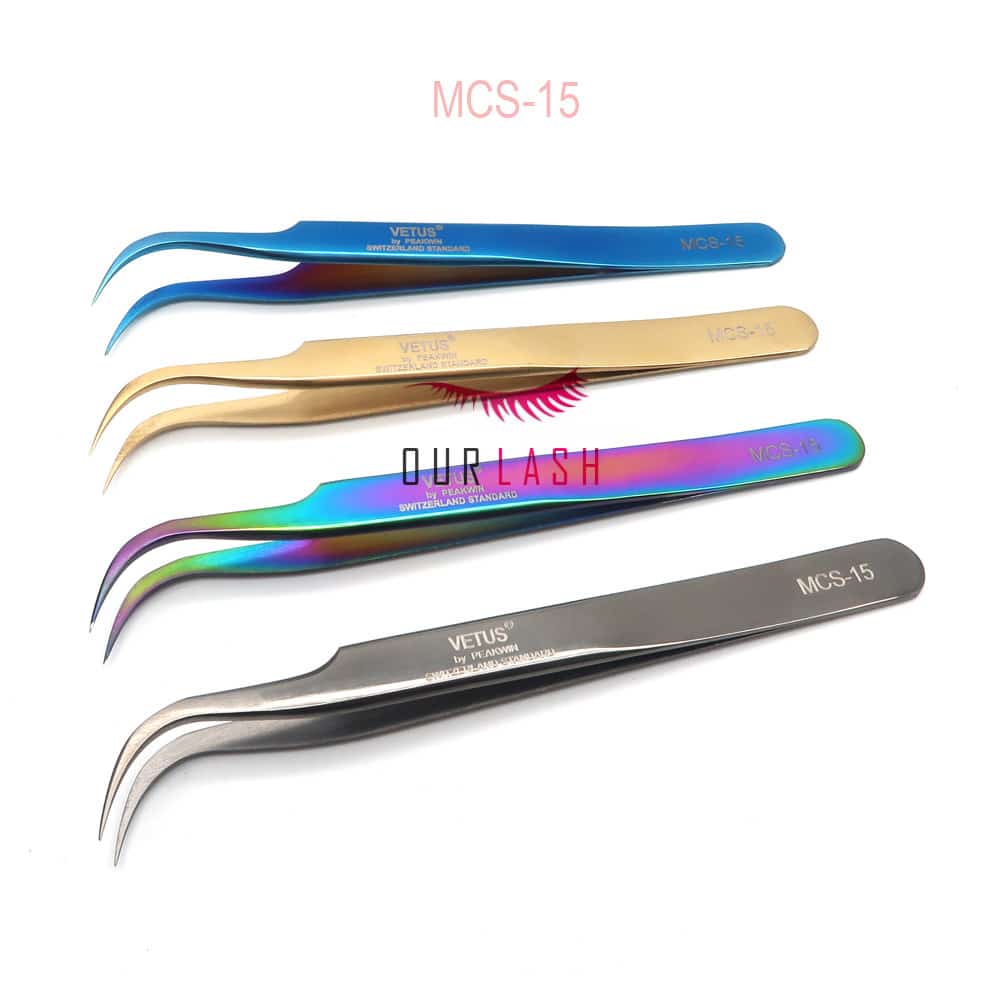
The most obvious distinction lies in tip design and clamping performance, which is also the core functional gap. Tweezers for eyelash extensions feature extremely slender, sharp and tightly closed tips. Professional lash artists need to pick up single extension lashes, separate natural eyelashes one by one, and attach tiny lash strands to individual natural lashes. The ultra-fine tips can accurately grasp only one thin lash at a time without disturbing surrounding hairs. The narrow gap between closed tips ensures no slipping during delicate work, and the elongated tip can easily reach hard-to-access areas such as inner corners, outer corners and lower lash lines. Some professional styles like curved tweezers and dolphin tweezers also have specially polished tips to prevent scratching the eye skin or eyeballs while maintaining high precision.
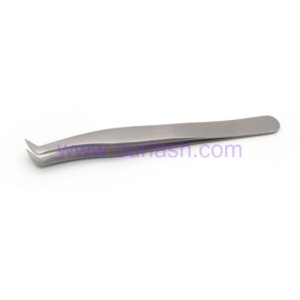
In contrast, tweezers for regular false eyelashes, including full-strip lashes and cluster lashes, have relatively wide, flat and slightly blunt tips. These tools are designed to hold thick lash bands or whole lash clusters rather than single fine hairs. A wider clamping surface provides stronger friction and stability to grip rigid cotton or plastic lash bands firmly. If people use extension tweezers with super thin tips to hold strip lash bands, the narrow contact area will cause frequent slipping. On the other hand, wide-tip regular tweezers can never separate or pick up individual lashes for grafting, making them totally unfit for extension work.
Next comes the overall shape, curvature and ergonomic design. Eyelash extension tweezers come in various curved and angled shapes, such as 45-degree angle tweezers and arc-shaped tweezers. Professional lash artists usually work for hours leaning over clients’ faces. The optimized curves fit the natural posture of wrists and fingers, reducing fatigue caused by long-term repeated movements. Their slender body also creates more flexible operating space around the narrow eye area. Most regular false eyelash tweezers adopt a straight and simple shape. Since users apply lashes to their own eyes casually and do not need to work continuously for a long time, straight handles are enough for basic gripping and adjusting. They focus on easy control rather than relieving long-term physical strain.
Materials and additional functional treatments also set the two types apart. Professional eyelash extension tweezers are mostly made of high-quality medical-grade stainless steel or titanium alloy. These materials have high hardness and good elasticity, so the thin tips will not bend or deform after thousands of repeated opening and closing movements. Many of them are also treated with anti-static coating. Static electricity often makes lightweight single extension lashes stick randomly to the tweezers or fingers, and the anti-static design effectively solves this problem. Besides, the surface is polished to resist corrosion from lash glue and cleaning liquids. For daily regular false eyelash tweezers, common stainless steel is fully competent. They are used less frequently and bear larger but less delicate clamping force, so they do not need ultra-high hardness or anti-static functions, which also keeps their cost lower.
There are also differences in size, weight and grip feel. Extension tweezers are generally longer and lighter, with slim handles that require precise control by fingertips. Every small movement decides the grafting effect, so they prioritize sensitivity over strong gripping power. Regular lash tweezers are shorter and thicker, with solid handles that allow users to apply greater force with the whole hand to hold thick lash bands steadily. Their operation is simpler and requires no millimeter-level precision.
It is a common mistake for beginners to mix up these two tools. Using regular tweezers for eyelash extensions leads to messy lash separation and low efficiency, while using fine extension tweezers for strip lashes easily damages the delicate tips. To sum up, the differences between the two kinds of tweezers stem from their targeted uses: extension tweezers serve high-precision, long-hour professional grafting work, while regular tweezers meet the simple demands of daily home makeup. Each has its own strengths and applicable scenarios, and choosing the matching tool is the first step to getting a neat and beautiful lash look.