Ask ten suppliers for a wholesale price on eyelash extensions and you will get ten different answers, none of them directly comparable. One quotes per tray, another per pair, a third says “it depends on the style” and leaves it there. That is not a coincidence. Pricing in this industry is deliberately opaque because once you understand the cost structure, a lot of the quotes floating around start to look silly.
The good news: the underlying math is simple. The global false eyelash market hit roughly $1.8 billion in 2025, synthetic fiber now accounts for about 89% of volume, and factory-direct prices have stayed remarkably stable over the past two years. This guide breaks down what different products actually cost at wholesale, what moves the price up or down, and where the hidden costs hide. No vague ranges — real numbers you can take to any negotiation.
First, the Straight Answer
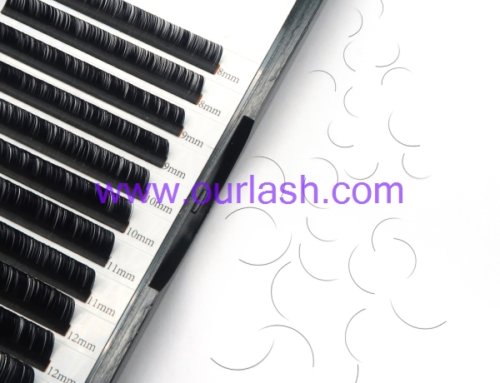
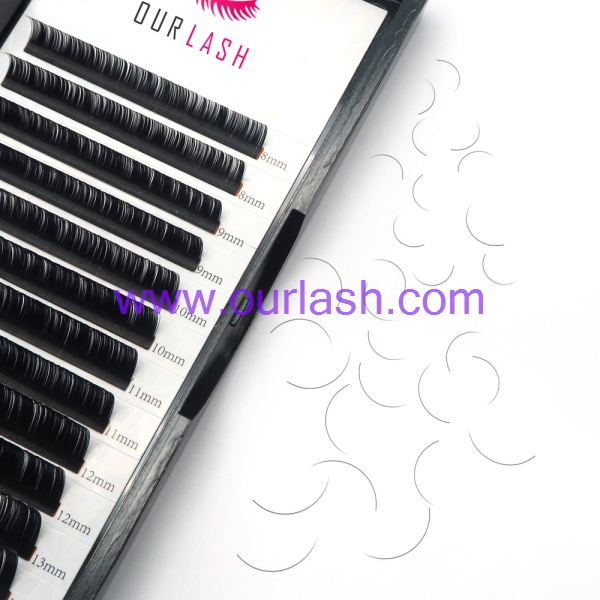
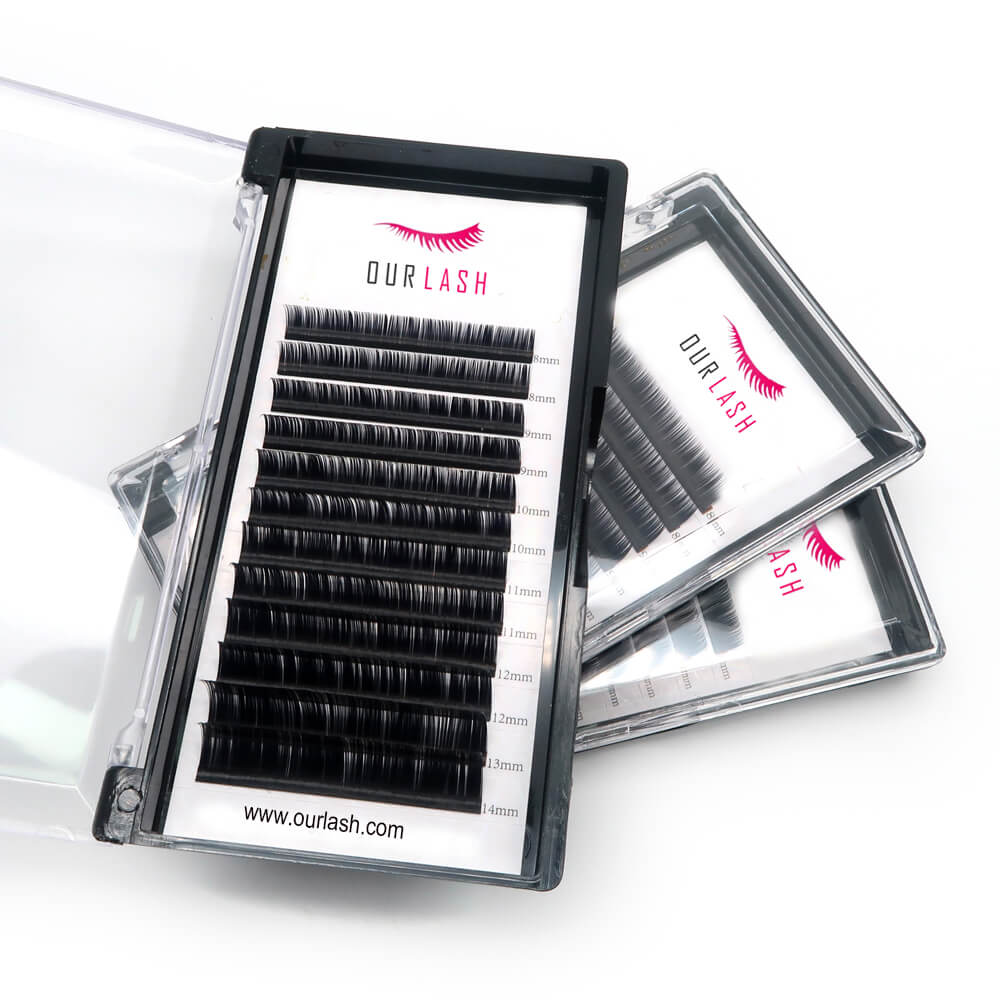
If you are buying directly from a Chinese factory at reasonable volume, here is where wholesale pricing lands in 2026, per tray (that is one tray of individual lashes, roughly 8–16 lengths per style):
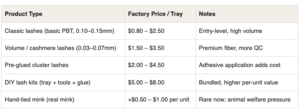
Those are real numbers pulled from current B2B market data — Alibaba and Made-in-China listings across Qingdao and Shijiazhuang factories in mid-2026. The famous “$0.10 tray” listings exist, but they are what they look like: practice-grade product with inconsistent curls and glue you would not want near an eye. More on that below.
What Actually Moves the Price
Every lash product’s price is built from the same five variables. Understand these and you can reverse-engineer any quote you receive.
1. Fiber material
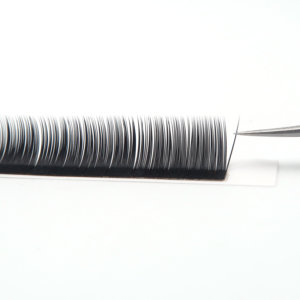
PBT (polybutylene terephthalate) is the industry standard — it holds curl, feels soft, and costs a fraction of animal hair. Within PBT there are grades: standard matte black PBT is cheap; Korean-sourced PBT with tighter diameter tolerance costs more. “Cashmere” and “velvet” are marketing names for finer synthetic fibers, usually 0.03–0.05mm, and they genuinely cost more to produce because thinner fiber breaks more easily during manufacturing. Mink is increasingly irrelevant — mink’s market share actually shrank in 2025 as cruelty-free pressure mounted, and most “mink” sold today is faux anyway.
2. Thickness and length mix
Thinner lashes (0.03, 0.05, 0.07mm) are harder to handle in production than 0.15mm. A tray of 0.05mm volume lashes simply costs more per unit than a tray of chunky classic lashes. Length range matters less, but a style that spans 8–16mm takes more setup than a single-length tray.
3. Hand-tied vs. machine-made
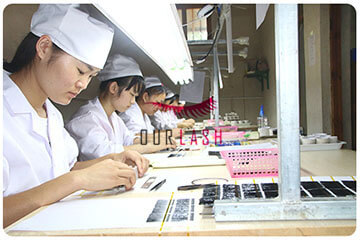
This is the biggest single cost driver. Machine-made fans come off a line fast; hand-tied volume fans are exactly what they sound like — someone sits there tying each fan. Hand-tied premium styles (3D–20D fans, YY/W shapes) carry a visible labor premium. It is also the clearest signal of product tier: if a supplier quotes you $1.50 for hand-tied 20D fans, the fans are not hand-tied.
4. Style complexity
Classic lashes are the cheapest to produce. Volume fans cost more. Pre-glued cluster lashes add another step entirely — adhesive must be applied to each cluster base with consistent dosage and cured properly. That extra production step is why pre-glued cluster lashes sit a tier above plain classics, and it is also the step where cheap factories cut corners. Glue that is too thick, too thin, or unevenly cured is the difference between lashes that stay on for days and lashes that slide off by lunch.
5. Packaging
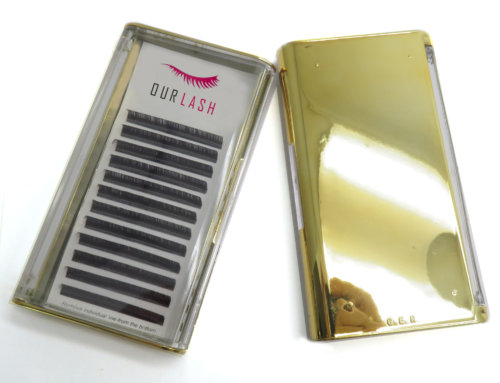
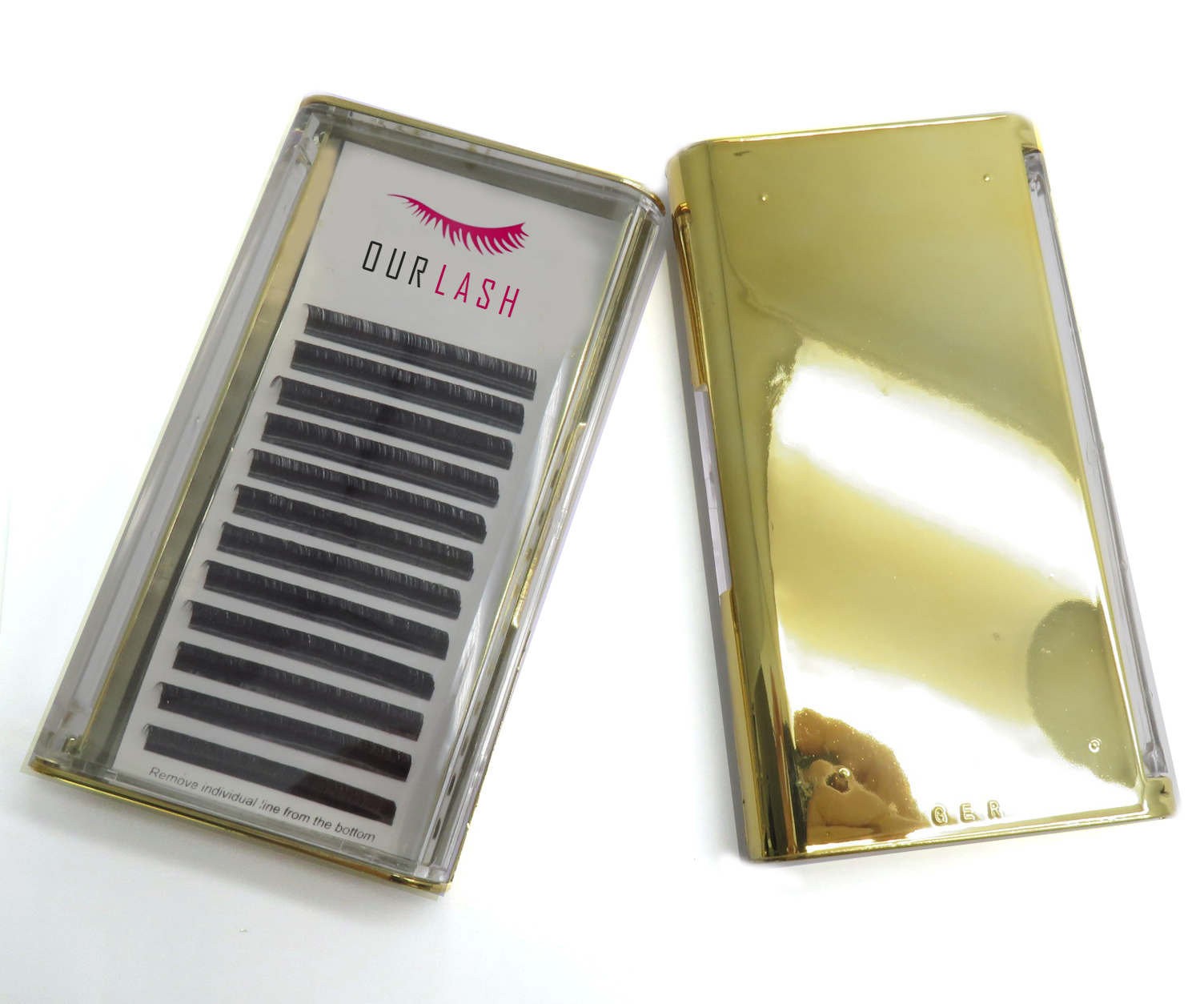
Standard packaging (a plain tray, maybe a sleeve) costs almost nothing. Custom packaging is where per-unit cost climbs: custom tray wallpaper, logo printing, and branded boxes typically add $0.50 to $3.00+ per unit. Eco-friendly materials add another $0.15–$0.30. For a brand, this is usually worth it — but it is a line item, not a surprise.
MOQ and the Volume Discount Curve
Wholesale pricing is a staircase, not a flat line. Here is the current volume discount curve for private-label synthetic lashes from Chinese factories (per unit, FOB China):
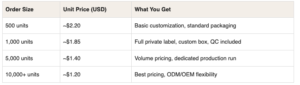
Notice the shape of it. The jump from 500 to 1,000 units saves you $0.35 per unit — that is meaningful. The jump from 5,000 to 10,000 saves only $0.20. Most of the discount is captured by the time you hit 1,000 units. If a supplier is quoting you their 10,000-unit price on a 200-unit trial order, they are either generous or lying.
Two things worth knowing about MOQs. First, “MOQ” almost always means “per style” — you can split a 1,000-unit order across several styles, which is how smart buyers test a range without committing deep on any single product. Second, sample fees are separate. Express sampling runs $150–$300 including shipping, which sounds steep until you remember it is the cheapest insurance you will ever buy. More on that in the checklist below.
The Costs Nobody Quotes
Every price guide mentions the tray price. Few mention the rest. Here is the full landed-cost picture for a typical private-label order:
- Tray/unit price— the quote itself, $1.50–$5.00 depending on tier.
- Custom packaging— $0.50–$3.00+ per unit for wallpaper, logo, boxes.
- Shipping and customs— $0.30–$0.80 per unit on typical sea-freight orders; express air is 3–5x that but gets you stock in days instead of weeks.
- Samples before ordering— $150–$300 express, sometimes credited against your first order (ask).
- QC on arrival— if you do not inspect incoming stock, you are paying for whatever defects arrive. Count on this.
- Storage— lashes are light but bulky; a few hundred trays is a closet, a few thousand is a storage unit. Shelf life is roughly 12–18 months unopened, so inventory that sits costs you twice.
Here is the thing nobody tells you: for a salon or small brand, shipping and packaging routinely cost more than the lashes themselves. A $2,000 lashes order can easily carry $800–$1,200 of freight and packaging on top. Budget for the whole picture, not just the unit price.
Cluster Lashes Are a Different Pricing Animal
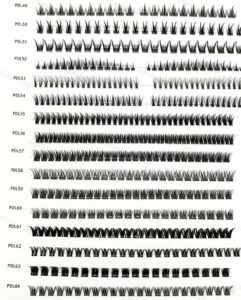
Everything above applies to classic individual lashes. Cluster lashes — the pre-cut segments that have been the fastest-growing category in the market — follow a slightly different logic. Each tray of clusters contains fewer, larger pieces, and the pre-glued or self-adhesive variants carry that extra manufacturing step we talked about.
What this means for you: wholesale cluster pricing clusters (sorry) in the $2.00–$4.50 per tray range for pre-glued styles, with multi-dimensional styles like YY/W fans at the top end. DIY kits that bundle clusters with bond, sealant, and applicator run $5.00–$8.00 per set wholesale — higher per unit, but each unit sells at a much higher retail price because the customer is paying for the whole experience. If you are targeting the at-home market, the DIY kit route is where the margin lives.
The “Too Cheap” Warning
You will see listings at $0.10–$0.30 per tray. Run. Here is why: at that price, the fiber is recycled or ungraded, the curl consistency is a coin flip, and the adhesive — if it is a pre-glued product — is almost certainly not medical grade. Industry audits put the share of quality failures traceable to unverified raw materials at around 68%. A batch of cheap lashes that sheds mid-wear, irritates a client’s eye, or gives your brand a one-star review costs more than the savings you pocketed on the tray.
The price floor is real and it is visible: any factory selling below roughly $0.80 per tray of classic lashes is losing money on materials alone, which means they are cutting something you cannot see. When a quote looks too good, ask the supplier to walk you through their material spec and QC process. The ones who can answer in detail are the ones whose prices are honest. (If you want the full framework for telling a real factory from a middleman, we laid it out here.)
How to Get an Honest Quote (in 4 Steps)
You can cut through most of the opacity yourself:
- Send a complete spec, not a vague inquiry.Style, thickness, curl, length range, quantity, packaging, target price. Suppliers respond to specifics with specifics; vague emails get vague quotes.
- Ask for a price breakdown.Unit price, packaging, tooling/setup fees, freight estimate, sample cost — line by line. A supplier who gives you the breakdown is a supplier who understands their own costs.
- Order samples from your top two or three candidates, not the cheapest.$300 in samples beats $3,000 in returns. Test application, curl consistency, and for pre-glued products, how long they actually stay on.
- Negotiate the total, not the unit price.“Can you absorb the sample fee against the first order?” or “What does the price look like if we take two styles instead of one?” often move the needle more than haggling over cents on the tray.
And when you are comparing quotes, remember the curve from earlier: unit price only makes sense against quantity and included services. Two suppliers quoting the same $1.85 are not offering the same deal if one includes custom packaging and the other charges $0.90 extra for it.
FAQ
Q: What is a realistic budget for a first wholesale order?
For a small brand testing the market, plan on $1,500–$4,000 landed for a first order — 1,000 units around $1.85 each, plus packaging and freight. Sample costs run $150–$300 before that.
Q: How much do salons actually pay per set?
A salon using mid-tier wholesale trays (around $20–$40 per tray retail-brand equivalent) spends roughly $2–$6 of lashes per full set and charges $100–$300 for the appointment. The lashes are rarely the expensive part of a lash service.
Q: Are factory-direct prices lower than Alibaba/Made-in-China listing prices?
Often, yes — listings build in platform fees and sometimes a “browse margin.” Contacting the factory directly, or using a factory’s own site, typically gets you closer to the true floor. That said, platform-verified factories have a paper trail that direct contacts may not.
Q: What is the difference between wholesale and private label pricing?
Wholesale is buying existing products at volume. Private label adds customization — your branding, your packaging, sometimes your spec — and typically costs $0.30–$1.00+ more per unit for the custom elements. The full breakdown is in our private label guide.
Q: Do prices drop seasonally?
A little. Factories in Qingdao and Shijiazhuang tend to have more capacity in Q1 and are readier to negotiate; Q3–Q4, ahead of peak beauty seasons, is tighter. The difference is usually a few percent — not enough to time your whole business around, but worth knowing before you sit down to negotiate in October.
OURLASH has been manufacturing eyelash extensions, cluster lashes, and DIY lash kits for 14 years from our factory in Qingdao, China. We publish honest pricing, send samples before you commit, and support private label at MOQs that suit growing brands. Send us your spec and we will walk you through the full breakdown — no vague ranges.