
When it comes to false eyelashes, a common misconception prevails among beauty enthusiasts: the thinner the false eyelashes, the better. Many people believe that thinner lashes are softer, more natural-looking, and more comfortable to wear, while thicker ones are stiff, unnatural, and even irritating. However, this view is overly one-sided. The quality and suitability of false eyelashes depend on a variety of factors, and thickness is just one of them. To determine whether thinner false eyelashes are really better, we need to analyze different types of false eyelashes based on their wearing methods, understand the characteristics, advantages and disadvantages of different thicknesses, and combine personal needs to make a reasonable judgment.
False eyelashes can be divided into two main categories according to their wearing methods: eyelash extensions and self-applied false eyelashes, each with distinct thickness-related characteristics.
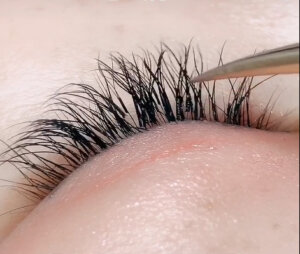
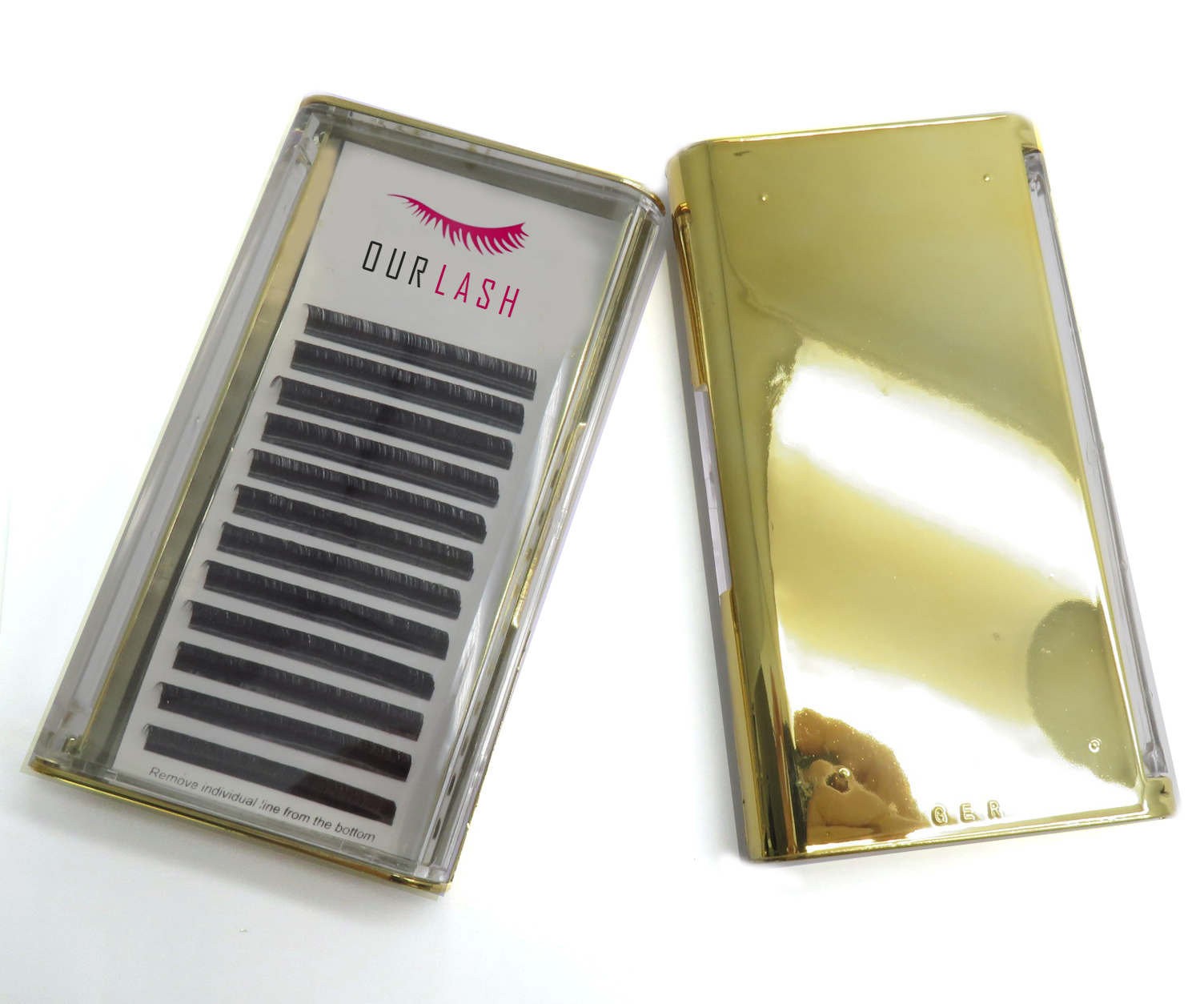
Eyelash extensions are applied by professional lash technicians, and they are further divided into three common subtypes: volume eyelash extensions, classic eyelash extensions, and pre made fan lash extensions. Each subtype has a specific range of thickness, and the impact of thickness on their performance is quite obvious.
Volume eyelash extensions are known for their fluffy and dense effect, which requires technicians to “make fans” by combining multiple thin false lashes into a cluster and then grafting them onto a single natural lash. The thickness of volume eyelash extensions usually ranges from 0.03mm to 0.10mm, and a key requirement is that the thickness must be less than 0.10mm—this is because thinner lashes are more flexible and easier to twist and combine into delicate fans. In general, the thinner the volume lashes, the softer they are, which makes them more comfortable to wear and more natural in appearance, as they can better blend with natural lashes without creating a heavy or rigid feeling. However, thinner volume lashes also have obvious drawbacks: the thinner the lash, the more time-consuming it is to make fans and complete the grafting process, which directly leads to higher prices. Additionally, thinner lashes are more fragile and prone to breakage, especially if they are not properly cared for after grafting.
Classic eyelash extensions are a more straightforward type, where a single false lash is grafted onto each natural lash without the need to make fans. Their thickness range is wider, usually from 0.10mm to 0.25mm. Similar to volume lashes, classic lashes also follow the rule that the thinner they are, the softer they are. Thinner classic lashes (such as 0.10mm and 0.12mm) are lightweight and comfortable, with a natural effect that is almost indistinguishable from real lashes. However, they also require more time to graft compared to thicker ones, as technicians need to be more careful to ensure each single lash is accurately attached. Thicker classic lashes (such as 0.18mm, 0.20mm, and 0.25mm) are stiffer, which may cause a slight foreign body sensation when worn, but they are more durable and easier to graft, resulting in lower prices. It is worth noting that classic lashes with a thickness exceeding 0.15mm are usually flat eyelash extensions—unlike regular round classic lashes, flat lashes have a flattened cross-section, which makes them much softer than ordinary thick classic lashes, effectively solving the problem of stiffness caused by excessive thickness.
Pre made fan lash extensions are a convenient alternative to volume eyelash extensions. As the name suggests, the fans are pre-made by the manufacturer, so technicians do not need to spend time making fans themselves, which saves grafting time. However, pre made fan lashes share the same drawbacks as volume lashes: the thinner they are, the softer and more natural they are, but they are also more time-consuming to produce (leading to higher prices) and more prone to breakage. Moreover, pre made fans may not be as flexible as hand-made fans, which may affect the overall naturalness to a certain extent.
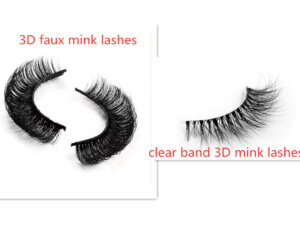
The second category is self-applied false eyelashes (false eyelash), among which faux mink lashes are the most popular type. Faux mink lashes are usually made of synthetic fibers that imitate the texture of real mink hair, and their common thicknesses are 0.07mm and 0.05mm. The material of faux mink lashes is mainly divided into three types: Korean PBT, German PBT, and Chinese PBT. PBT is a high-quality synthetic material with good flexibility and durability, and the quality of PBT from different regions varies slightly—German and Korean PBT are generally softer and more durable than Chinese PBT.
For faux mink lashes, the same “thinner is softer” rule applies: 0.05mm faux mink lashes are softer and more natural than 0.07mm ones, and they can create a more delicate eye makeup effect. However, 0.05mm lashes also have higher production costs, and not all lash factories are willing to produce them. Due to the high precision required for manufacturing ultra-thin lashes, most factories have a minimum order quantity requirement—usually, they will not produce a style if the order is less than 2000 pairs. This makes 0.05mm faux mink lashes less accessible and more expensive than 0.07mm ones, which are more commonly found in the market and more affordable for ordinary consumers.
After analyzing the characteristics of different types of false eyelashes, it is not difficult to conclude that “the thinner the false eyelashes, the better” is not an absolute truth. Thinner false eyelashes do have advantages such as being softer, more natural, and more comfortable, but they also come with drawbacks like higher prices, longer grafting time (for grafted lashes), and poor durability. Thicker false eyelashes, on the other hand, are stiffer (except for flat lashes) and less natural, but they are more durable, easier to apply, and more cost-effective.
The key to choosing the right thickness of false eyelashes lies in personal needs and scenarios. For those who pursue a natural, delicate and comfortable effect and are willing to pay higher prices, thinner lashes (such as 0.03-0.07mm volume lashes, 0.10-0.12mm classic lashes, or 0.05mm faux mink lashes) are a good choice. For those who need durable, easy-to-apply lashes with a more dramatic effect and a limited budget, thicker lashes (such as 0.15-0.25mm classic lashes or 0.07mm faux mink lashes) are more suitable. Additionally, factors such as the condition of one’s natural lashes, eye shape, and makeup style also need to be considered—for example, people with thin and fragile natural lashes should avoid overly thick grafted lashes to prevent damage, while those with thick natural lashes can choose thicker lashes to enhance the dramatic effect.
In conclusion, the thickness of false eyelashes is not a criterion for judging their quality. Thinner lashes are not necessarily better, and thicker lashes are not necessarily worse. The most suitable false eyelashes are those that match personal needs, comfort requirements, and budget. By understanding the characteristics of different thicknesses and types of false eyelashes, we can make more informed choices, avoid the misunderstanding of “pursuing thinness blindly”, and achieve the ideal eye makeup effect while ensuring comfort and durability.
This is OURLASH, if you have other questions about eyelash, contact with us.