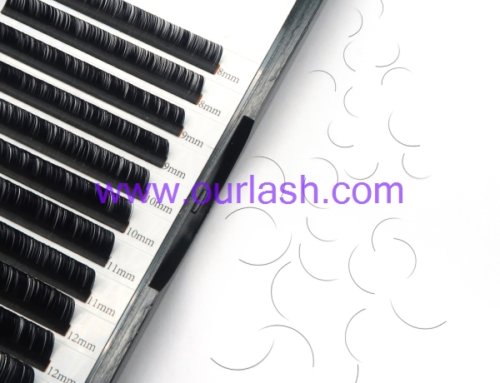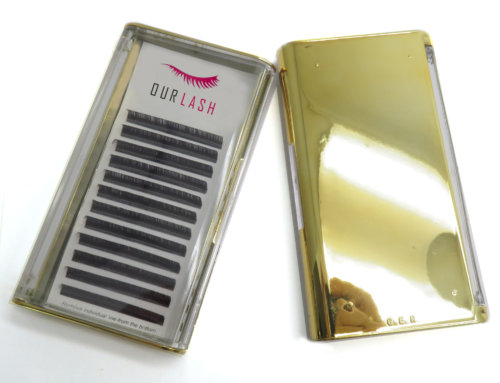
Walk down the lash aisle of any drugstore in 2026 and you’ll see the same split: trays of cluster lashes with adhesive already on the base, sitting next to nearly identical trays that require a separate bond and seal. Same fibers. Same lengths. Same curl options. The difference is one decision the factory made before the product ever shipped — and it changes almost everything about how the lashes wear.
That decision matters more than most buyers realize. Industry surveys consistently show that 35–45% of women who are interested in false lashes never buy them because the glue intimidates them, and another 20–25% try once, fumble the application, and never come back. The adhesive is not a detail. It is the single biggest reason people abandon the category. If you’re choosing between pre-glued and regular cluster lashes, you’re really choosing between two completely different wearing experiences — and picking wrong is how a $15 tray ends up unused in a drawer.
Here’s the honest breakdown from a factory that makes both.
The Real Difference: Where the Adhesive Lives
Pre-glued cluster lashes leave the factory with adhesive already applied to the cluster base, covered by a protective film. You peel, place, pinch, done. No bond step, no seal step, no waiting for glue to turn tacky.
Regular cluster lashes (often sold as “bond and seal” kits) ship with bare bases. You apply a bonding agent to your natural lashes first, place the clusters underneath, then lock everything in with a sealant. The two-step process takes longer, but you control the adhesive — which type, how much, where.
Worth knowing: “pre-glued” is not one technology. As of 2026, three variants are competing on the market, and they perform quite differently.
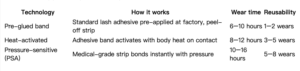
Most budget pre-glued products on the market use the first type. Premium lines — the ones reviewers describe as “actually staying on” — increasingly use the second and third. If you’ve tried pre-glued lashes once and watched them slide off by lunch, you likely tested the cheapest version of the technology, not the category itself. Our pre-glued lash collection runs across all three formats, and the difference in real-world hold is significant.
Side-by-Side: The Numbers That Matter
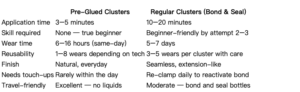
One row deserves emphasis: regular clusters last days, not hours. That’s not marketing — it’s the chemistry. Bond-and-seal adhesives are formulated to cure slowly and hold through showers, sweat, and sleep. Pre-glued adhesives are formulated to be gentle, instant, and repositionable, which is exactly why they release by end of day. Neither is broken. They were engineered for different jobs.
Where Pre-Glued Wins
Speed, obviously — but also forgiveness. A pre-glued cluster can be lifted and repositioned three times without losing its grip. That matters enormously if you’re new to placement or working without a magnifying mirror. Regular clusters give you one shot per placement once the bond sets; miss the root by a millimeter and you’re pulling the cluster back off with tweezers.
Mornings and travel. No liquids means no TSA questions, no leaked bond in your makeup bag, no 20–30 second tack wait while you’re already late. For a 7 a.m. commute or a weekend bag, peel-and-press is genuinely the better tool.
The sensitivity factor people skip over. Around 8–12% of women report some reaction to cyanoacrylate-based lash adhesives — redness, itching, swelling. If you’ve ever reacted to strip lash glue, pre-glued formats using pressure-sensitive adhesives sidestep liquid cyanoacrylate entirely. Zero fumes, zero liquid contact. Also relevant if you wear contact lenses: fumes from fresh bond can cloud lenses, and pre-glued eliminates that risk.
Where Regular Clusters Win
Wear time, and it’s not close. Five to seven days versus one day. If you want to wake up with lashes on Tuesday morning and still have them look right on Friday, bond-and-seal is the only DIY format that delivers. Salon extensions last longer still, but a full set runs $80–$250 and two hours in the chair. Regular clusters sit in the middle: extension-like wear at 5% of the cost. We break down that cost structure in detail in our eyelash extensions cost breakdown.
Cost per wear. A $12 pre-glued tray that delivers 10 single-day wears costs $1.20 per wear. A $15 bond-and-seal kit that delivers three 5-day cycles across 20 clusters costs well under a dollar per wear. The sticker prices sit close together; the math doesn’t.
Control over the adhesive itself. Oily skin? Choose a stronger bond. Sensitive but not reactive? Choose a low-fume formula. You can also re-clamp clusters daily with tweezers to reactivate the bond — the single biggest wear-time extender most users have never heard of. With pre-glued, the adhesive you got in the tray is the adhesive you live with.
The Removal Question — Where Damage Actually Happens
Neither format damages lashes when removed correctly, and both damage them when removed badly. The difference is temptation. A pre-glued cluster lifting at hour nine is easy to peel off dry — gently, and it’s fine. A day-five bond-and-seal cluster that resists removal is where people start tugging, and tugging is what pulls out natural lashes.
The rule is identical for both: saturate with an oil-based remover, wait 30–60 seconds, let the cluster slide off. If it resists, more remover and more patience — never force. Our step-by-step home application guide covers the full removal method along with aftercare that extends wear.
For Lash Brands: Which One Should You Stock?
If you run a salon, an e-commerce brand, or a distribution business, this comparison looks completely different — and the 2026 data points one direction.
The self-adhesive segment is projected to grow from roughly 5% of the total lash market in 2024 to 18–22% by 2028. The global self-adhesive false eyelash market reached $265.5 million in 2025 and is forecast to hit $422 million by 2032. Meanwhile, self-adhesive products command a 2–3x retail price premium over traditional lashes at comparable cost of goods — the best margin profile in the category.
The caveat: pre-glued products also carry higher return risk when adhesive quality disappoints, which is why adhesive formulation — not the fibers — is where factory differentiation actually lives. The smartest play we’re seeing from brands in 2026 is the hybrid model: lashes that work self-adhesive for quick daily wear and accept traditional bond for long-wear occasions. Brands launching hybrid SKUs report 37% lower return rates than single-mode products, because the customer can’t “buy the wrong type.”
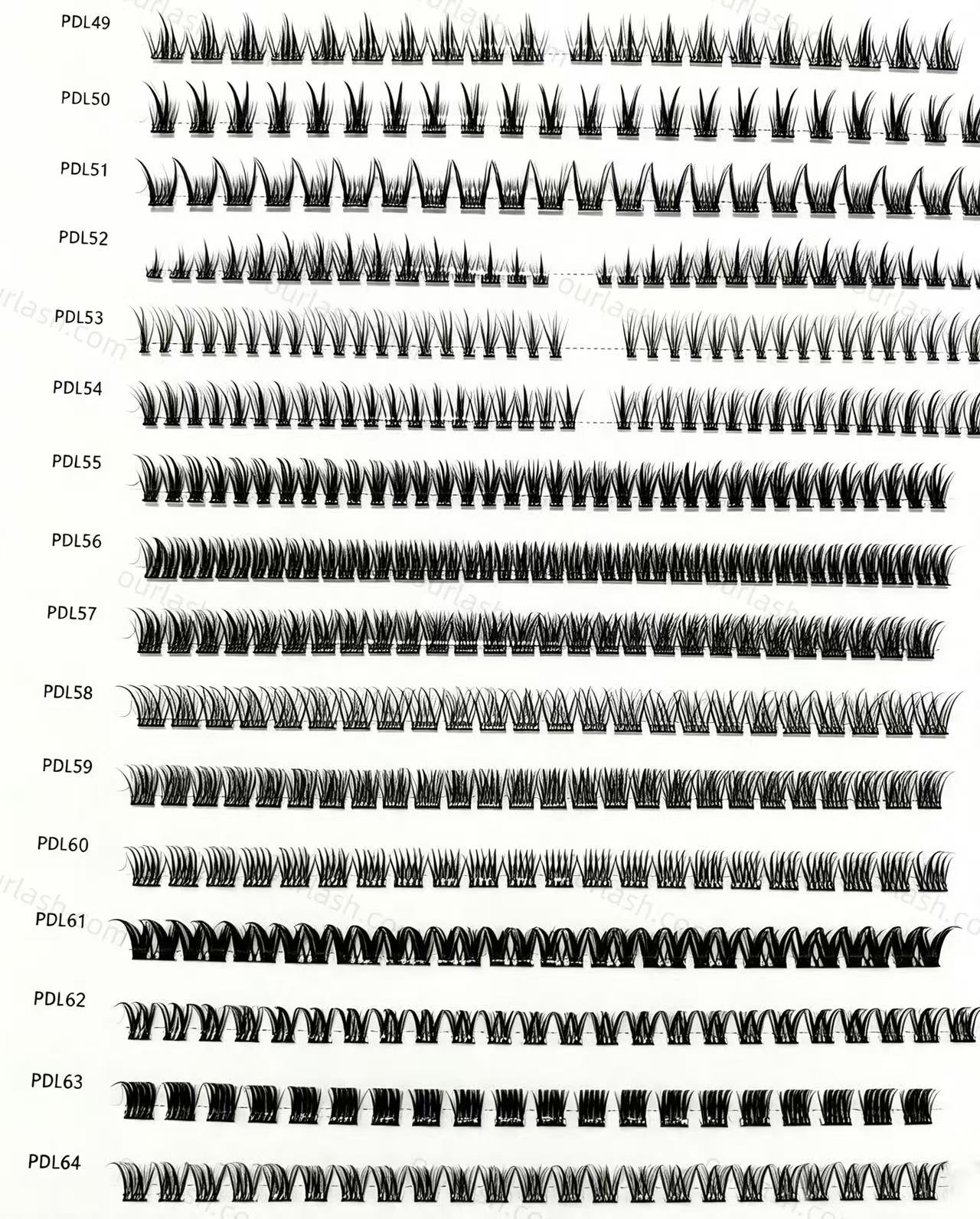
On the sourcing side, capacity has matured fast. Qingdao — which produces the majority of the world’s lashes — went from 3–5 factories offering self-adhesive production in early 2025 to 15–20 by mid-2026, which has pushed pricing into reach for mid-market brands. If you’re evaluating suppliers, our guide to choosing a lash vendor in China covers the verification process, and our PDL01–PDL16 pre-glued cluster line and DIY lash kits are both available for private label.
Quick Answers
Q: Do pre-glued lashes really work?
Yes — for what they’re designed to do. Expect 6–16 hours of hold depending on the adhesive technology and your skin type. They are a same-day product, not a multi-day one. Reviews complaining that pre-glued lashes “don’t last a week” are reviewing the wrong product category.
Q: Can I add regular glue to pre-glued clusters to make them last longer?
You can, but it’s the worst of both worlds — the residual factory adhesive interferes with the fresh bond. If you want multi-day wear, buy bare-base clusters and a proper bond-and-seal kit. It costs about the same.
Q: Which is better for beginners?
Pre-glued, unambiguously. Placement mistakes are correctable, there’s no tack-time skill to learn, and you’ll finish your first application in five minutes instead of thirty. Move to bond-and-seal once placement feels automatic — most people transition within a month.
Q: Which is better for oily skin?
Regular clusters with a strong-hold bond. Oil breaks down pressure-sensitive and pre-applied adhesives noticeably faster. On oily lids, pre-glued wear time can drop to 4–6 hours; a good bond-and-seal routine with daily re-clamping still holds for days.
Q: Are pre-glued lashes safe for sensitive eyes?
Often safer. Pressure-sensitive formulations skip liquid cyanoacrylate, the compound behind most lash adhesive reactions. But “hypoallergenic” has no legal definition in most markets — patch test anything new on your forearm for 24–48 hours first. Eyelid skin is roughly ten times thinner than forearm skin, so a clean arm test lowers risk without eliminating it.
The Bottom Line
Neither format wins. They’re different tools. Pre-glued clusters are a five-minute, same-day, zero-skill product — genuinely the best entry point into lashes, and the segment growing fastest for good reason. Regular bond-and-seal clusters are a five-day commitment that looks closer to salon extensions and costs less per wear.
Plenty of people keep both. Pre-glued for Tuesday mornings and travel, bond-and-seal for weekends and events. That’s not indecision — that’s using each product for what it was engineered to do.
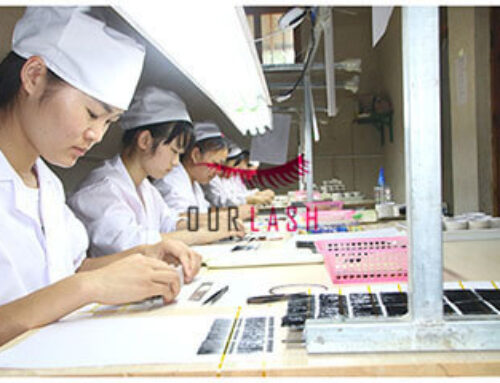
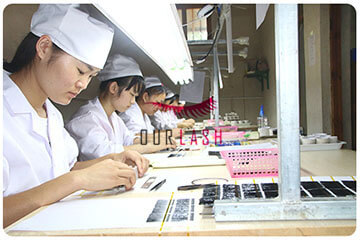
OURLASH manufactures both pre-glued and bond-and-seal cluster lashes from our factory in Qingdao, China — 14 years of production experience, all three self-adhesive technologies, and private label options at every volume.