Short answer: Alibaba works for stock samples and trial orders, direct factory works for production orders above 1,000 units, and trade shows work for finding new vendors and confirming your existing one is still competitive. Each channel costs differently, fails differently, and breaks the order differently when something goes wrong. The right pick depends on order size, brand stage, and how many vendors you’re willing to run in parallel.
This is a channel comparison, not a general wholesale 101. For pricing tiers and product types see the wholesale price guide. For what to ask a vendor once you’ve found one, the vendor selection guide covers the rest of the workflow.
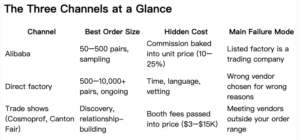
None of these is “the best.” Each one fails when you use it for the wrong job. The sections below walk through what each one is actually doing under the surface.
Channel 1: Alibaba
Alibaba is a directory plus a payments layer. It is not a manufacturer. Most “factories” listed are some mix of trading company, OEM reseller, and small workshop. The platform makes it easy to find vendors, send RFQs, and pay — and harder to know who you’re actually paying.
What Alibaba is genuinely good for
Sample orders below 100 pairs. Stock SKUs where you don’t care which factory made them. Comparing price ranges across 10 vendors in an afternoon. Cheap communication when you don’t yet have a vendor manager contact. If you’re running a brand still validating product-market fit, Alibaba is the cheapest way to get physical product in hand. If your goal is testing pre-glued versus bond-and-seal on real wearers, the pre-glued vs regular comparison pairs well with a 50-pair trial order from the platform.
What Alibaba charges and hides
The commission is not a line item. It is baked into the unit price the vendor quotes. Verified Gold Supplier accounts pay roughly $5,000–$30,000 per year depending on tier, and that cost is recovered through higher per-pair pricing on every order. You don’t see the commission; you see a 10–25% markup on what the same factory would quote you direct. For a 500-pair private label run, that gap is real money — usually $200–$800 on the order. Three things get hidden behind that markup. First, the “factory” listing may be a trading company that outsources production to whichever vendor is cheapest that week — your sample may have come from a different factory than your reorder. Second, supplier verification badges are paid, not audited; the badge means the vendor paid for it, not that the platform inspected anything. Third, dispute resolution only works if you keep all communication and payment inside Alibaba. Once you take conversation to WeChat and payment to direct wire, you’ve lost the only real protection the platform offered.
How to use Alibaba without losing money
Treat it as a directory, not a vendor. Message 5–10 in your category. Filter for “Manufacturer” rather than “Trading Company.” Ask the same three questions to all of them: what’s your reorder MOQ, what’s your QC pass rate over the last three batches, can I tour your facility on video this week. Vendors who answer those three cleanly in 24 hours are usually worth pursuing. Vendors who dodge any of them are usually not factories at all.
Channel 2: Direct Factory
A direct factory relationship is what most successful private label lash brands run by month six. You have one or two factories, a vendor manager’s WeChat, reorder terms in writing, and you bypass Alibaba on production runs.
What direct factory is genuinely good for
Production orders from 500 pairs up to whatever your reorder cycle can absorb. Custom packaging runs that need coordination between the lash factory and the printer — our custom packaging guide walks through why the box printer and lash factory have to be on the same schedule. Repeat orders where the setup data is saved on the line. Anything above 2,000 pairs almost always goes direct because the savings on commission more than pay for the management overhead.
What direct factory actually costs and hides
The unit price is usually 10–25% under what you’d see on the platform. On a 2,000-pair order, that’s $400–$1,500 below Alibaba pricing. But direct isn’t free. The costs that move when you cut the chase are: a vendor manager on your team (or you doing the work, which is 5–10 hours per order), language overhead, and 2–4 weeks to vet the factory properly before the first order. Add one bad first-order experience and the savings are gone. The same factory that quoted you a great first order may have no QC staff and a production line that runs on manual labor — your reorder quality may not match your sample. Capacity may be lower than their sales rep claimed, so your reorder slips two weeks during Q3 and the Black Friday lead-up. The factory you found through Alibaba may not be the factory that produces your order — the listing is often a sales rep, not the operations team. The private label guide walks through how to spot the gap.
How direct factory relationships fail
The number one failure is vendor lock-in without a backup. If 100% of your reorder volume goes to one factory and they raise prices, change ownership, or have a fire, you have 60–90 days of scrambling. The healthy pattern is one primary factory plus one secondary factory running 10–20% of your volume as a parallel capability test. Cost is slightly higher; risk is dramatically lower. The MOQ guide has the negotiation tactics that make parallel sourcing work at lower volume.
Channel 3: Trade Shows
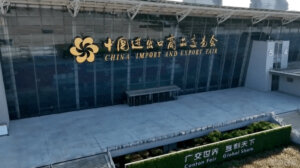
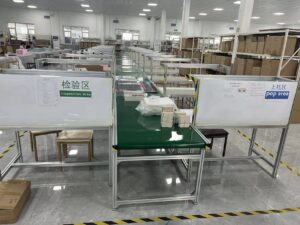
Cosmoprof (Bologna, Las Vegas, Hong Kong) and the Canton Fair (twice a year in Guangzhou) are the two main events where lash factories and brand buyers meet in person. Cosmoprof is the most international. Canton Fair is where Chinese factories show their full range and you can meet ten vendors in a day.
What trade shows cost, hide, and how to use them
Meeting 8–15 vendors in person in two days is what Alibaba cannot do. Confirming your existing factory is still competitive by walking their booth versus competitors’, and seeing physical samples under booth lighting (booth lighting is flattering; factory lighting is honest — the comparison reveals a lot). Canton Fair is the single best place to validate a factory’s range and confirm the production lead times they’ve quoted are realistic. Booth fees for lash factories at Cosmoprof Asia run roughly $5,000–$15,000 per booth per show, recovered through order pricing. For the buyer, costs are: round-trip flight ($800–$2,500 depending on origin), hotel (4 nights at $200–$300), and 3–5 days out of office. First-time buyers should count on $3,000–$6,000 total. For a brand doing $200K+ per year in lash orders, that’s cheap relative to the volume decisions you’ll make based on what you learn. What trade shows hide: booth staffing is usually a sales rep plus a manager, not the operations team — the vendor you bonded with over dinner may not handle your reorder three months later. The special show pricing is real but conditional on orders placed before you leave or within 30 days. The best factories don’t tour shows — they have more inbound demand than they need. Their absence from Cosmoprof or Canton Fair doesn’t tell you anything bad; their presence doesn’t tell you anything good.
Pre-book 8–12 meetings before you fly. Don’t walk the floor hoping to find vendors — that wastes two days. For each meeting, bring a printed spec sheet with your order size, target price, packaging, and lead time. Spend 20 minutes per meeting. Take notes immediately after — by the end of day two, every vendor blurs together. Don’t place an order at the show. Tell each vendor you’ll send a PO within 30 days. The best factories will honor show pricing past the show; the desperate ones won’t, which is itself a signal. The eyelash business guide has a printable meeting template if you want a starting structure for the spec sheet.
How to Pick Based on Brand Stage
For a brand at $0–$25K annual lash spend, Alibaba is right. Use it for samples and small trial orders. Don’t commit to a vendor until you’ve placed two reorder cycles and seen consistency. For a brand at $25K–$100K annual lash spend, use Alibaba for discovery and direct factory for production: find 3–5 candidate factories on the platform, then move to direct for orders above 500 pairs. For a brand at $100K+ annual lash spend, direct factory is primary, trade shows are for validation and new vendor discovery, and Alibaba is last-mile backup — usually the case where your primary factory misses a deadline and you need 200 pairs in two weeks. The order-stage logic above assumes one brand and one factory. As you add brands or expand SKUs, the math shifts. The eyelash business guide walks through how channel choice should evolve as your order book grows.
The Mix Most Working Brands Run
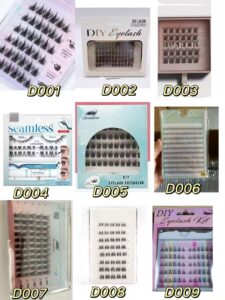
By year two, most successful brands end up running a mix. Primary factory direct, doing 70–80% of volume. One secondary factory direct, doing 15–25% of volume as parallel capability and a backup. Alibaba as a same-week backup for emergency short-runs. One trade show visit per year to confirm your factories are still competitive. The cost breakdown guide walks through how this mix lands financially across a 12-month order book. Pure Alibaba relationships usually don’t survive the second-year reorder cycle. Pure direct-factory relationships without a backup usually don’t either. The mix is what holds when one channel breaks — and one channel will break, usually in Q3 when everyone is racing for the same factory capacity. If you’re running a starter set or test kit alongside your main line, the DIY kit wholesale guide covers how secondary SKUs usually pull a different vendor profile.
FAQ
Is Alibaba safe for lash wholesale?
For samples and small orders, yes. Use platform payment (Trade Assurance), keep all communication inside the platform, and verify the vendor’s license and business registration before paying. For production orders above 1,000 pairs, the platform doesn’t add protection that direct factory communication doesn’t also give you.
What’s the cheapest way to source cluster lashes wholesale?
Direct factory, full stop on units above 1,000 pairs. Below that, Alibaba. The unit price difference is usually 10–25%. For a 1,000-pair private label run, that’s $300–$1,200.
Are trade shows still worth attending in 2027?
For first-time sourcing decisions, yes. For ongoing vendor validation, once a year is enough. Canton Fair is the highest density of Chinese lash factories in one building, twice a year.
Can I mix channels on one order?
Yes, and most established brands do. The pattern: 70–80% from primary factory direct, 15–25% from secondary factory direct, the balance from Alibaba as same-week backup. The trick is keeping your spec consistent across all three channels — same fiber, same base, same packaging.
How do I know if an Alibaba vendor is really a factory?
Ask for a video tour of the production line. Real factories have nothing to hide and will pull up a phone and walk the floor within 24 hours. Trading companies stall, send generic factory photos, or redirect you to a different sales rep. The general wholesale guide has the full vendor-vetting sequence.
Factory View: Why Direct Factory Pricing Beats Alibaba on Real Orders
On a 1,000-pair private label run, Alibaba pricing lands at roughly $0.55–$0.85 per pair for stock-style cluster lashes. The same order at the same factory direct lands at $0.40–$0.65 per pair. The difference is the commission layer and the fact that the Alibaba sales rep is taking a margin that the direct vendor manager isn’t. Multiply across a year of reorders and the savings usually pay for one full-time vendor manager — which is what most brands eventually hire anyway. Direct factory pricing isn’t always lower on the first order. The thing happens on order two and beyond: once the factory knows you’re a real reorder customer, the reorder floor drops and reorder priority goes up. Alibaba doesn’t give you that; the platform is built around new-customer acquisition, not reorder relationship depth.