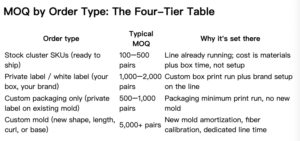
Short answer: stock lash SKUs ship at 100–500 pairs, private label starts at 1,000–2,000, custom mold runs 5,000+, and pre-glued sits 30–50% higher than bond-and-seal because the adhesive line is its own setup. The published MOQ is rarely the actual floor. Three places are genuinely negotiable, and most first-time buyers leave room on the table.
What follows is what the factory side does with your order — setup time, raw material batches, QC labor, packaging minimums — so the number on the quote stops being abstract.
For first-time buyers the most useful reference is the general wholesale guide — it frames MOQ as one step in the larger buying pipeline. This article digs into the floor itself.
What Actually Drives MOQ at the Factory
MOQ isn’t arbitrary — it’s a protective floor over four cost components. Understanding them tells you which are negotiable and which aren’t.
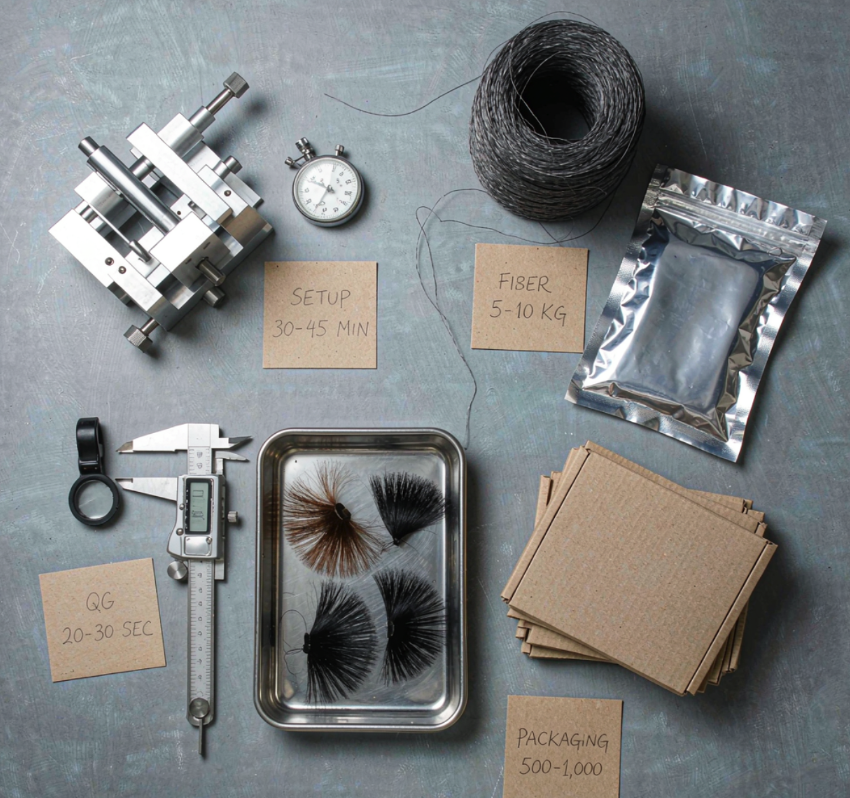
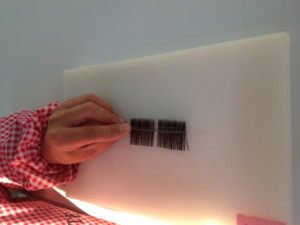
Setup time. A lash line takes 30–45 minutes to set up for a new SKU — machine calibration, fiber threading, QC station alignment. At typical production rates that’s 50–100 units before the line reaches steady state. Below that, the factory is paying labor without producing in earnest.
Raw material batches. PBT fiber comes in 5–10 kg master batches. Bond comes in 50–200 g. Black dye in 1 kg minimums. A run has to consume enough raw material that QC numbers stay in spec partway through.
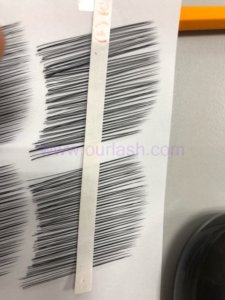
QC labor. One QC station spends 20–30 seconds per cluster tray and 2–3 minutes per sealed retail box. For a 50-pair run, the QC setup is 80% of the labor. The factory doesn’t lose money on materials for a small order — it loses it on setup and QC overhead, which is why unit cost on tiny runs is high.
Packaging minimums. Custom boxes and printed trays have their own print-run minimums, often 500–1,000 pieces. A private-label order has to clear that bar before the lash-side MOQ matters.
When you read a published MOQ through that lens you can usually tell which component is binding. That’s where negotiation has room.
First Order vs. Reorder: The 30–50% Step-Up
Almost every factory builds a step between your first order and your reorder. First-order MOQ protects against you disappearing; reorder tier rewards the fact that you’ve cleared that hurdle.
Common pattern: first order 1,000 pairs for private label. Reorder drops to 500 within six months. Some vendors hold a 300-pair “ongoing reorder” floor for buyers on a predictable schedule.
This is normal. The mistake is treating first-order MOQ as the floor you’ll live with forever. Build it into the original conversation: “What’s your reorder floor?” Most factories quote it without you fighting. If a vendor won’t commit to a reorder tier in writing, that’s a signal — their reorder behavior usually matches their first-order flexibility. Our vendor selection guide walks through how reorder MOQ maps to vendor reliability over a longer service window.
Three Places MOQ Is Genuinely Negotiable
Even on the published MOQ, three specific levers work almost universally.
Stock SKUs and mixed-SKU orders. If the published MOQ is 500 pairs per SKU, you can usually split across SKUs as long as the total is 500 or higher. Mixed-color, mixed-width, mixed-curl at the same MOQ tier is standard. Use this — most brands should test 3–4 widths and 2–3 curls on first order, not 1,000 of one.
Advance payment. Paying 100% upfront rather than the standard 30/70 sometimes drops MOQ 20–30%. The factory sheds its credit risk and shares some of that back. Don’t be shy about asking. The worst they say is no.
Trial orders. Many factories run a one-time 50–100 pair trial at a higher unit cost — often 30–50% premium over the wholesale tier. The trial is for proof: fit, sell-through, packaging. After the trial, your reorder MOQ drops to the standard floor. Cleanest first move for any new vendor relationship.
What’s not negotiable in practice: custom mold minimums, pre-glued adhesive line minimums (the line setup is fixed cost), and anything below 50 pairs — at that volume the factory loses money on the order.

MOQ by Format: Cluster, Strip, Extension, Pre-Glued
The format choice shifts the MOQ tier because each format has its own production line.
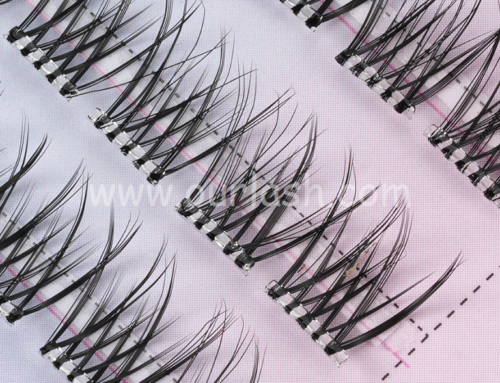
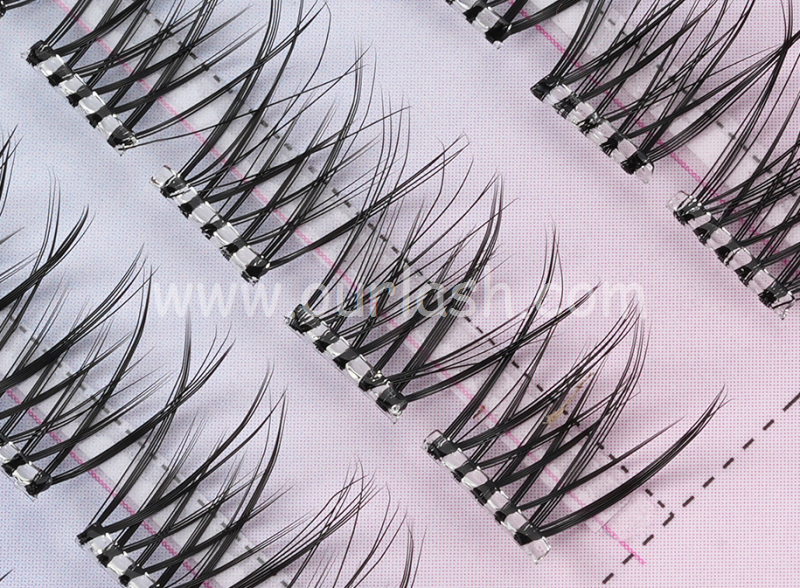
Cluster lashes (bond-and-seal). Standard wholesale floor — 100–500 pairs stock, 1,000–2,000 private label. Lowest MOQ of any lash format, which is why most brands start here. The format comparison guide explains when bond-and-seal makes more sense than pre-glued at first order.
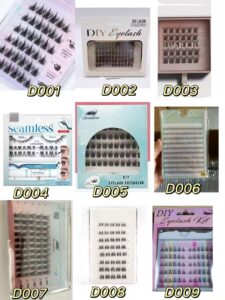
Strip lashes and DIY kit lashes. A tier higher than cluster — 200–500 pairs stock, 1,000+ private label. The strip line is faster, but packaging minimums push the order size. The DIY kit guide covers how kits are configured at the wholesale tier.
Classic extensions (individual fibers). Highest MOQ of the three because each extension is handcrafted or hand-fanned. 200–500 pairs stock, 2,000+ private label. The wholesale pricing guide walks through per-pair tiers at these volumes, and the format comparison shows how extension MOQ maps to salon-channel economics.
Pre-glued clusters. 30–50% higher than bond-and-seal because the adhesive line is its own setup. Expect 200–500 pairs stock, 2,000+ private label. Pre-glued also has its own packaging requirements — humidity-controlled sachets and sealed trays — which add to the minimum.
How Lead Time Changes With MOQ
Lead time scales loosely with MOQ — the factory isn’t working 10× harder on a 5,000-pair order than on a 500-pair one. The bottleneck is setup, not volume.
Stock SKUs at 100–500 pairs run 7–10 days production — most factories can turn a 100-pair reorder in a week.
Private label at 1,000–2,000 pairs runs 15–20 days. Add roughly a week for box print, label application, final QC.
Custom mold at 5,000+ pairs runs 25–40 days. New mold production, fiber calibration, sample round, then production. If your launch is date-fixed, place the order two months before you need it on the shelf.
Sample lead time is 3–5 days for stock SKUs. Most factories turn a 5-pair sample kit in under a week, and use it as the proof before the larger first order.
Reorder lead time is often 20–30% faster than first order once you’re established, because the line setup data is saved. Build this into your supply plan: first order takes the full lead time, subsequent orders can compress.
Reading an MOQ Clause: 5 Things to Check
Most brands don’t read MOQ clauses. Five points decide whether the floor is friendly or a trap.
Per-SKU vs. per-order. Stricter factories write “500 pairs per SKU” rather than “500 pairs per order.” Per-SKU blocks the split and raises the effective MOQ. Push for per-order whenever possible.
Mixed widths and curls allowed. The clause often says “mixed” without specifying. Get the split in writing — “any combination of width, length, curl within the catalog is permitted at the per-order MOQ.”
Reorder MOQ in writing. If first-order MOQ is 1,000 and the reorder tier drops to 500, get that on paper. Verbal reorder commitments evaporate when you reorder.
Customization surcharge below MOQ. Most factories accept sub-MOQ orders at a 20–50% unit premium. Get the surcharge schedule upfront. A 30% premium on a 200-pair order can be a smart test if the alternative is signing for 1,000 you can’t move.
Inspection rights. Third-party inspection at your cost, scheduled into the lead time, is standard above $10K — usually 1–2% of order value. Build it into the quote from day one.
FAQ
Q: What is a normal MOQ for lash wholesale?
100–500 pairs for stock SKUs, 1,000–2,000 for private label, 5,000+ for custom mold. Numbers vary by factory and format.
Q: Can I get a smaller first order to test the market?
Yes. Most factories offer a 50–100 pair trial at a 30–50% unit premium. After the trial, reorder drops to the standard floor. This is the cleanest way for a brand to start.
Q: Does MOQ include packaging?
Stock orders usually ship in plain white-label boxes. Private label orders include your branded packaging and count toward the MOQ.
Q: Can I split an order across multiple SKUs?
Usually yes, as long as the total reaches the per-order floor. Confirm this in writing before placing the order — some factories restrict per-SKU.
Q: Do larger orders get lower unit prices?
Yes. Most factories publish tiered pricing at 500 / 1,000 / 3,000 / 5,000 / 10,000+ pairs. The cost breakdown guide walks through what each tier covers on the factory side.
The Factory View: MOQ Is a Working Capital Question
From the production side, MOQ is the factory’s working capital floor. Every minute the line sits on a small run is unpaid setup. Every QC pass on 50 pairs is overhead that doesn’t scale down. The published MOQ isn’t profit protection — it’s labor protection. The factory will accept lower MOQ if you can give them a reason to absorb the overhead: 100% upfront, mixed-SKU simplicity, a predictable reorder schedule, or a higher unit cost.
What this means on the buyer side is that the published MOQ is rarely a wall — it’s the start of a conversation about how you can reduce their risk. Three questions almost always move the floor down: can we mix SKUs, can we pay upfront, and what’s your reorder tier after this first order? Walk through those before you accept the floor at face value.
The private label guide shows how MOQ fits into a brand’s spec-from-priority list, and the cost breakdown shows how MOQ affects per-pair pricing at each tier. If you’re starting from zero, the startup guide covers what first-order MOQ looks like across the major formats.
The mistake we see most: a brand commits to a 2,000-pair first order, sells through 600 in the first three months, and stores 1,400 pairs at a unit cost the economics never accounted for. Right-size the first order. Use trial tiers when they exist. Earn the volume discount by selling through, not by ordering more than you can move.
Quick Sizing Before You Order
Before you talk to a vendor, three numbers decide the floor. Cash you can put into the first order — not the inventory you want, the cash you can actually spend today. Sell-through you can realistically hit in 90 days given your existing traffic. Reorder timeline you can commit to. Multiply the first two. That’s your first-order ceiling. The factory’s published MOQ should sit below that ceiling, not above it. If it doesn’t, you need either more sell-through certainty or a smaller first-order tier — a trial run or a sample kit.
Want a quote at a specific MOQ tier? Send us your target format and quantity and we’ll come back with the actual per-pair number. Looking for the full wholesale catalog instead? Browse the cluster line.