Short answer: inspectors check seven things — fiber uniformity, curl consistency, glue point placement, adhesion strength, workshop hygiene, packaging accuracy, and a statistical sample of the finished batch before it ships. Most quality problems buyers blame on “bad lashes” trace back to one of those seven being skipped. A factory that can walk you through all seven on a video call, with the actual checklists in hand, is a factory you can wire a deposit to. One that answers with a certificate PDF and nothing else is not.
This is the long version of the QC section in our vendor selection guide — that piece covers how to pick a supplier, this one covers what happens inside a factory that controls quality. If you’re still deciding between channels, the channel comparison guide handles that stage first.
The Seven Checkpoints, One by One
1. Fiber uniformity
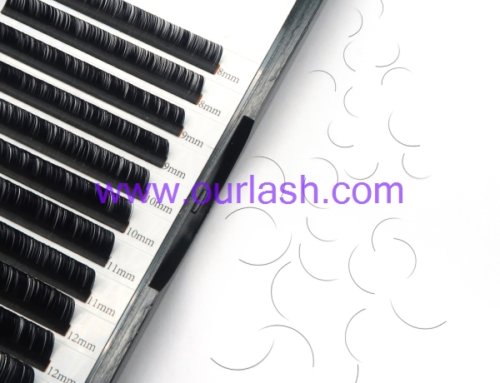
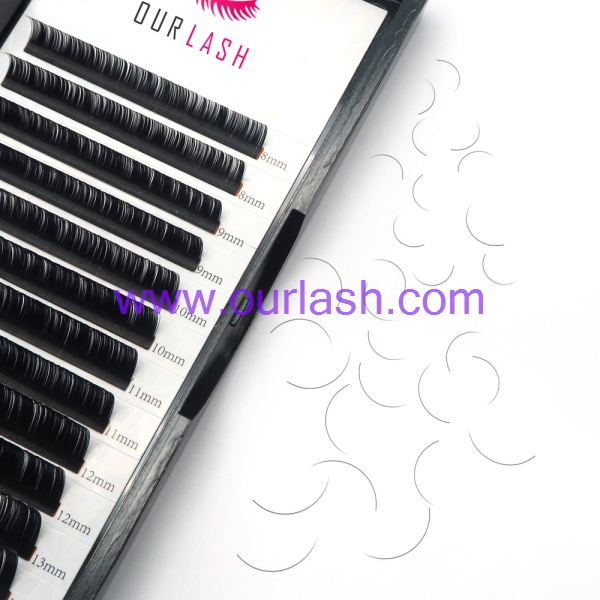
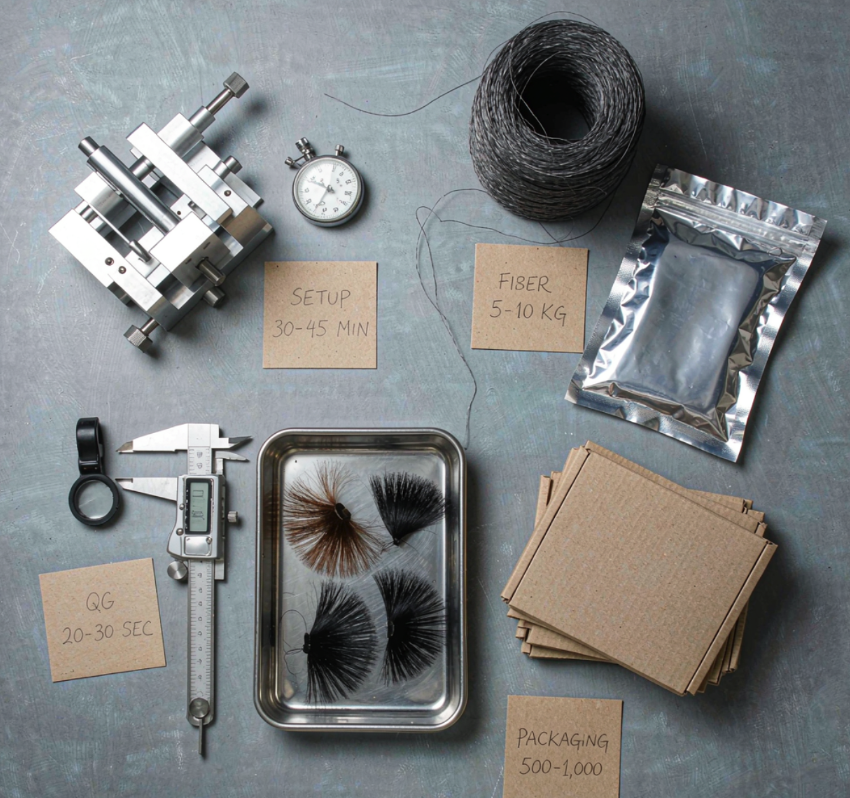
Inspectors pull a tray and compare individual lashes against a master sample under a light box. They’re looking for diameter consistency within the batch — a 0.07mm fiber that varies by more than roughly 0.01mm shows up on the eye as uneven texture. They also check taper: PBT fiber is supposed to taper at the tip, and cheap lots that skip the tapering process look spiky and plasticky.
2. Curl consistency
Curl is measured with a curl gauge — a set of curved templates in C, CC, D, and L shapes that each cluster gets pressed against. Curl has to hold the same shape within a batch, and survive a heat-and-humidity test: a sample tray sits in a chamber at 40°C and 90% humidity for 24 hours, then gets re-gauged. If a D curl relaxes into a C after the chamber, the curling process set the shape with heat alone and skipped the chemical-setting step. That tray will droop on a customer’s face in a humid summer week. This is also why the same SKU can wear differently across seasons — a failure mode we break down in why cluster lashes fall off.
3. Glue point placement
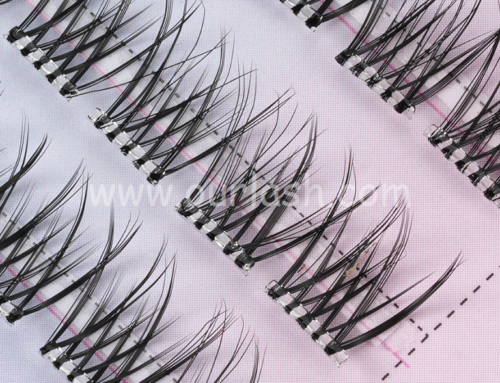
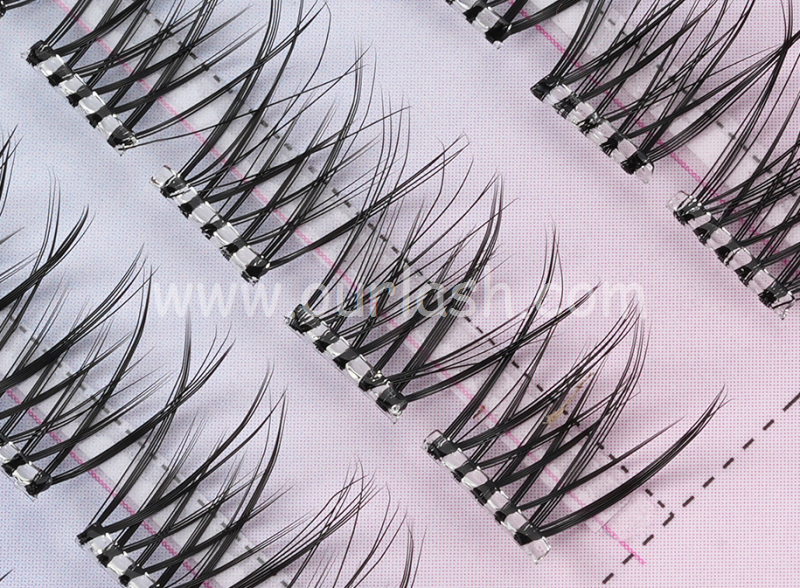
On cluster and volume fans, the bond points need consistent size, spacing, and distance from the base. Inspectors check three failure patterns: double-bonded points (two roots fused into one, which splits natural lashes on removal), off-center points (the fan sits crooked), and over-sized points that read as a visible blob. Batches with more than roughly 3% glue point defects get reworked or scrapped, because the defect rate compounds once the clusters are in a consumer’s hands.
4. Adhesion and bond strength
For pre-glued lashes, the factory tests peel strength on a sample from every lot: the liner strip is applied to a standard test surface, cured, and peeled at a fixed angle. The lot passes if peel force lands inside the spec window. Too weak and the cluster lifts within hours; too aggressive and it damages natural lashes on removal. Adhesive lots also get shelf-life testing — a pre-glued tray that sat in a warehouse past its cure date fails the peel test even though nothing about the fiber changed. Ask for the lot’s peel-test date, the same check the pre-glued vs regular guide recommends before committing to a batch.
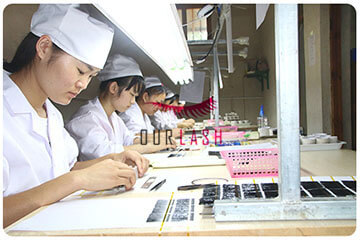
5. Workshop hygiene
Lashes are a semi-medical product: they sit on the eyelid margin for days at a time. A real QC program treats the production floor the way a cosmetics plant does. What inspectors look for: hairnets and gloves on the line, separated clean zones for fiber processing versus packaging, no food or personal items on workbenches, UV or alcohol sanitation for trays before filling, and pest-control logs posted and current. Workshops that hand-assemble lashes at home-style tables with open windows can’t pass this section, and their failures show up later as customer eye infections — the kind of review that kills a brand.
6. Packaging accuracy
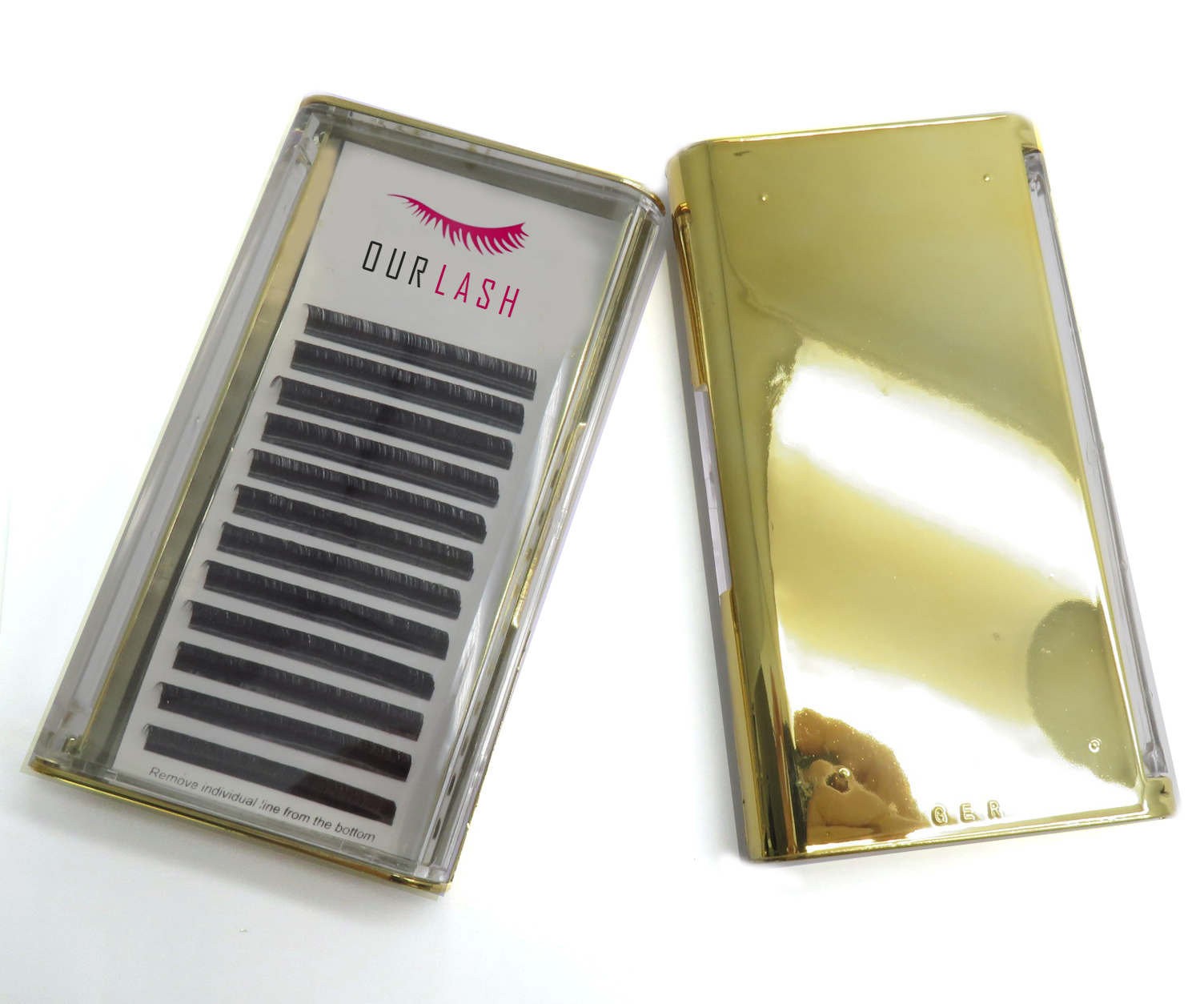
The last checkpoint before a carton closes: the right SKU count, the right curl-and-length mix, and the right artwork. Inspectors verify fill quantity by weight plus a manual count on sampled boxes, check that style numbers match the packing list, and confirm insert cards and barcode labels are correct — especially for private label orders running the buyer’s artwork for the first time, which is why the custom packaging guide recommends a printed proof before the full run, not just a PDF approval.
7. Pre-shipment sampling (AQL)
The final gate is a statistical inspection against an AQL standard — usually AQL 2.5 for major defects and 4.0 for minor, per ISO 2859 sampling tables. For a 5,000-unit order at Level II, that means inspecting 200 units pulled at random, with the batch failing if more than 10 major defects turn up. The inspector records defect counts by category, photographs failures, and issues a pass, hold, or reject. A factory that produces that report for every order is showing you its quality system working. Ask for a redacted report from a recent order; the format tells you more than any certificate on the wall.
The Inspection Flow Behind the Checkpoints
Those seven checkpoints don’t happen at the end of production. They sit at four gates:
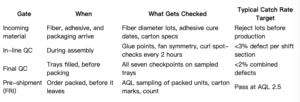
The point of the four gates is that defects get caught where they’re cheap to fix. A curl failure caught at in-line QC costs a re-run of one shift’s work. The same failure caught by your customers costs refunds, reviews, and a lost reorder cycle. The order-planning side of that equation — quantities, pricing tiers, first-order sizing — sits in the cluster lashes wholesale guide.
Third-Party Audits a Buyer Can Request
You don’t have to take a factory’s word for any of this. Four audit types are standard, and any factory with a real production floor can arrange them:
ISO 9001 certification audit — the baseline quality-management certificate. It says a documented system exists, not that your order will run through it cleanly. Useful as a floor, never as a ceiling. Factory audit (SGS, Intertek, TÜV, Bureau Veritas) — a third-party auditor walks the facility and scores it on equipment, process control, hygiene, and traceability. Cost runs $300–$1,000 per man-day depending on scope, and buyers typically request it before a first production order above $10K. During-production inspection — an inspector visits at the 20–40% production mark and reports against your spec sheet, catching issues while there’s still time to correct them. Pre-shipment inspection — the same auditor firms run the AQL check at the end for $250–$400 per man-day. On a $15,000 order, spending $700 on during-production plus pre-shipment inspection is the cheapest defect insurance in the sourcing world.
How a factory responds to an audit request is itself a screening signal — the pattern from the vendor vetting process: real factories quote a timeline and a cost-sharing arrangement; trading companies get vague, because the facility isn’t theirs to schedule.

What a Visitable Factory Looks Like
Factories that pass audits share the same visible traits, in person or over a live video walk-through:
- Scheduled video audits on 48 hours’ notice— someone on the floor with a phone, walking the line in real time. A pre-recorded “factory video” proves nothing; ask for a live walk during working hours.
- Physical checklists at each station— in-line QC sheets initialed by shift, with defect counts written in pen. Dated paper records beat a slick slide deck every time.
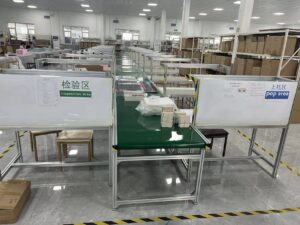
- A quarantine area— a marked shelf or cage for rejected trays and failed material lots. Factories with zero rejects either have no QC or no honesty.
- Traceable lot numbers— every carton coded back to a fiber lot and adhesive batch, so a customer complaint can be traced to a specific production run within minutes.
- Recent audit reports they’ll share (redacted)— with client names blacked out. Refusing to show any report, even sanitized, is the loudest red flag there is.
Reading a QC Report Without Getting Fooled
Ask any vendor for last quarter’s pre-shipment report and you’ll learn one of three things. A real report has a sample size, defect counts by category, photographs, and a dated signature — the numbers will be imperfect, because real production is. A report showing zero defects across every category for months is either fabricated or the factory isn’t actually inspecting. No report at all means you’re the QC department now. The middle ground is where the honest factories live: 0.5–1.8% defect rates, a rejected lot here and there, corrective actions noted. That’s what quality control looks like when it works — the pattern to expect before you commit reorder volume, structure your MOQ ladder with the MOQ guide, and build out the program in the private label guide.
FAQ
What is AQL in lash manufacturing?
Acceptable Quality Limit — the statistical standard (ISO 2859) that defines how many units to inspect and how many defects a batch can carry and still ship. Lash orders typically run AQL 2.5 major / 4.0 minor at inspection Level II.
How much does a third-party factory audit cost?
$300–$1,000 per man-day for a facility audit, $250–$400 for a pre-shipment inspection. Most buyers split the cost with the factory 50/50 or ask the factory to absorb it as a condition of the first order.
Is ISO 9001 enough to trust a lash factory?
It’s a floor, not proof. ISO 9001 confirms a documented quality system exists. It says nothing about whether your specific order ran through it. Pair it with a pre-shipment inspection on first orders.
Should I inspect every order or just the first one?
First order, always. After that, inspect any order where something changed — new SKU, new packaging artwork, new fiber lot, or a factory fresh back from Chinese New Year shutdown, when line staffing turns over.
Factory View: The Report You Should Ask Us For
Every OURLASH production order ships with its pre-shipment AQL report — sample size, defect counts by category, pass/fail, dated and signed. We’ll walk you through it on a live video call and show you the quarantine shelf while we’re at it, because a factory confident in its QC process has nothing to hide behind a certificate PDF. Book a video audit through the contact page before your next order, or start with a sample run from the product catalog and check the trays yourself against the seven checkpoints above. They’re the same seven our inspectors use every day.