Category: Wholesale Sourcing Guides · Updated August 2026 · Reading time: 8 min
The DIY lash kit market crossed $847 million in 2026 and is compounding at roughly 12% a year, according to industry forecasts. That’s not a hype number — the growth is built on brutal, simple economics. A salon set runs you $150–300 and needs a re-fill every two to three weeks. A $20 kit done in your own bathroom gives a similar look for months. Once that math clicks for people, they don’t go back.
Alibaba’s own buyer data backs it up: engagement on DIY eyelash extension kits grew 13.63% year over year through early 2026, peaking in January. And here’s the part that matters if you’re reading this as a wholesaler or brand owner — searches for “wholesale” and “custom logo” within that category jumped over 23% month over month. That’s not consumers. That’s people like you, looking to source kits and slap their own brand on them.
This guide covers what’s actually selling, which component kills more products than any other, what MOQs and private label costs really look like in 2026, and how to vet a supplier so your first container isn’t your last.
Why DIY kits are a different animal than bulk lash trays
If you’ve only ever bought strip lashes or cluster trays in bulk, the kit changes the game in three ways. First, average order value jumps — you’re bundling lashes, bond, sealant, tweezers and a mirror into one box instead of selling a $2 tray. Second, repurchase rate goes up, because the bond and sealant are consumables. A customer who loves your kit reorders in 4–6 weeks. A customer who bought a tray reorders maybe twice a year. Third, and this is the one most wholesalers miss, the buyer is different. Bulk tray buyers are salons and distributors. Kit buyers are brand-builders — a lash tech launching her own line, an influencer selling a signature set, a boutique chain stocking an exclusive product. They want custom packaging, not just cardboard boxes.
That’s why kits command better margins across the board. Retail prices run $15–35 for a decent kit; wholesale cost typically lands at $3–8 depending on contents and volume. That’s a 3–5x spread before you even factor in the brand premium a custom kit earns over a plain one.
What’s selling in 2026: wispy over volume, natural over drama
Industry reports tracking wholesale demand put natural and wispy styles at over 60% of orders this year. The mega-volume “spider lash” look is still around, but it’s shrinking into a niche. Buyers want sets in the 9–12mm range, C or D curl, PBT fiber — the “clean girl” aesthetic that dominates TikTok and Instagram right now.
Two sub-trends worth your attention. Self-adhesive (glue-free) kits are the fastest-growing segment — TikTok’s got 500+ videos on them and they’re selling out at volume. The trade-off is wear time (3–4 days instead of 5–7), but beginners love skipping the messiest step entirely. And wispy textured clusters are the hero SKU for most profitable brands this year — the lightweight, “barely there” look is where the money is.
For reference, the top-performing DIY kit products on TikTok Shop are moving over 10,000 units a month each. This isn’t a small pond.
The one component that makes or breaks your kit
Want to know what kills a DIY lash product? It’s almost never the lashes. It’s the adhesive.
Spend an hour scrolling Amazon reviews and Reddit threads on cluster lash kits and the same complaints surface over and over: the bond dries out after a couple of weeks, it doesn’t hold in humidity, it irritates sensitive eyes. One veteran user in r/lashclusters put it bluntly: “Discard the bond/seal WAY before you think you should.” That’s a customer whose experience was shaped by adhesive that had gone bad in the tube.
Here’s the thing — adhesive chemistry is where cheap factories cut corners, because good bond costs 3–4x more per tube than the stuff that “works” on a lab bench but fails in a real bathroom. When you’re evaluating a sample kit, pay attention to three things:
- Slow-dry formulation.The bond should stay workable for 20–30 seconds after application. Fast-dry glue is a beginner’s nightmare.
- Humidity resistance.Test it in steamy conditions if you can. Southeast Asian and southern US markets need bond that survives moisture.
- Skin sensitivity.ISO 10993 biocompatibility standards are becoming a purchase trigger, not a checkbox. Kits that advertise sensitive-eye-safe formulations earn premium positioning and repeat purchases.
If a supplier can’t tell you what’s in their bond — or dodges the question — walk away. That single tube is the difference between a 4.5-star product and a return pile.
What to check in a sample kit before you commit
Order samples from at least two suppliers and go through them like a customer would, not like a distributor. That means actually wearing them.
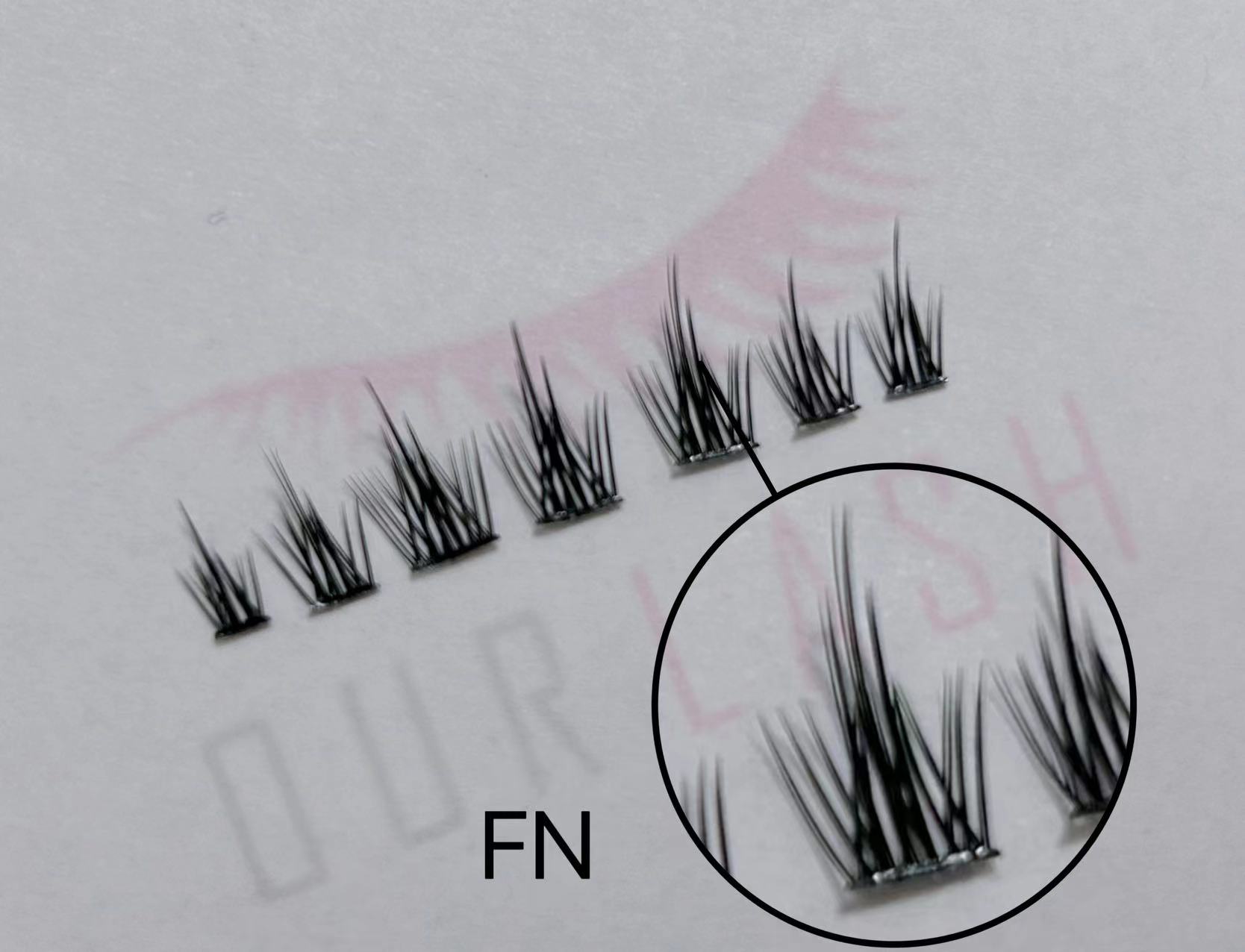
- Cluster quality:PBT fiber should be soft but springy, curl consistent across the tray, and the band flexible without cracking. Check for shedding — rub the base and see how many fibers come loose.
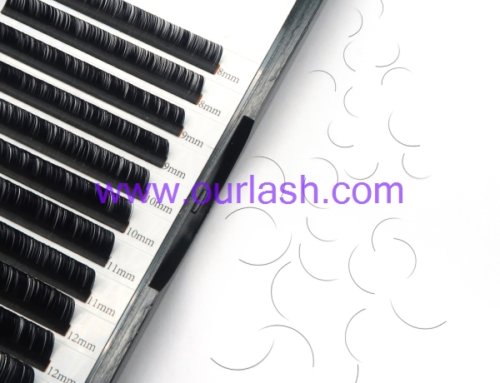
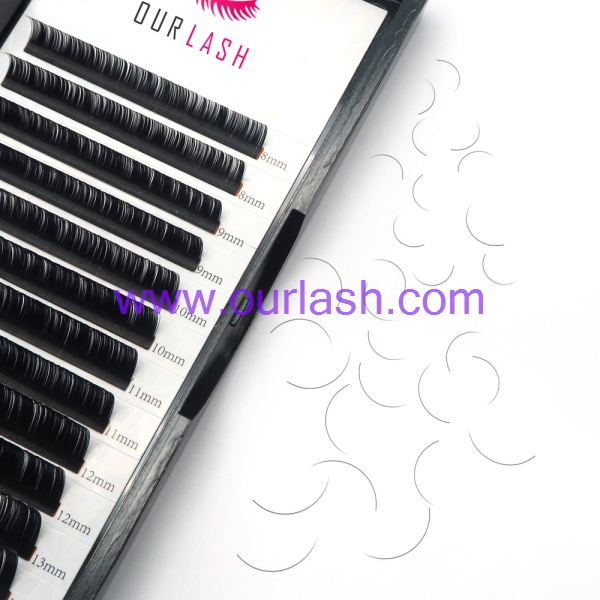
- Count and length mix:A proper kit carries 72+ clusters across 8–16mm. Multi-length trays let beginners map a natural lash line instead of working with one uniform size.
- Tools:The tweezers matter more than people admit. Flimsy metal that bends on first use turns a good experience into a frustrating one.
- Instructions:The kits that win include illustrated, beginner-friendly guides — ideally with a QR code linking to a tutorial video. The skill gap is the industry’s biggest return driver; the brands that bridge it win.
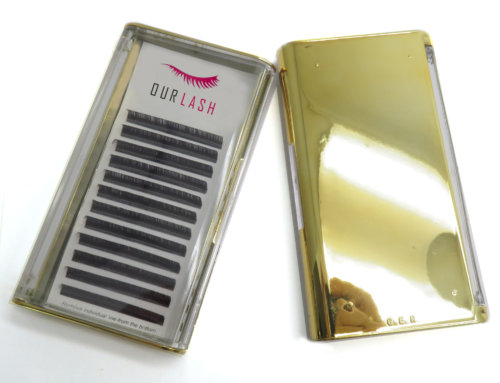
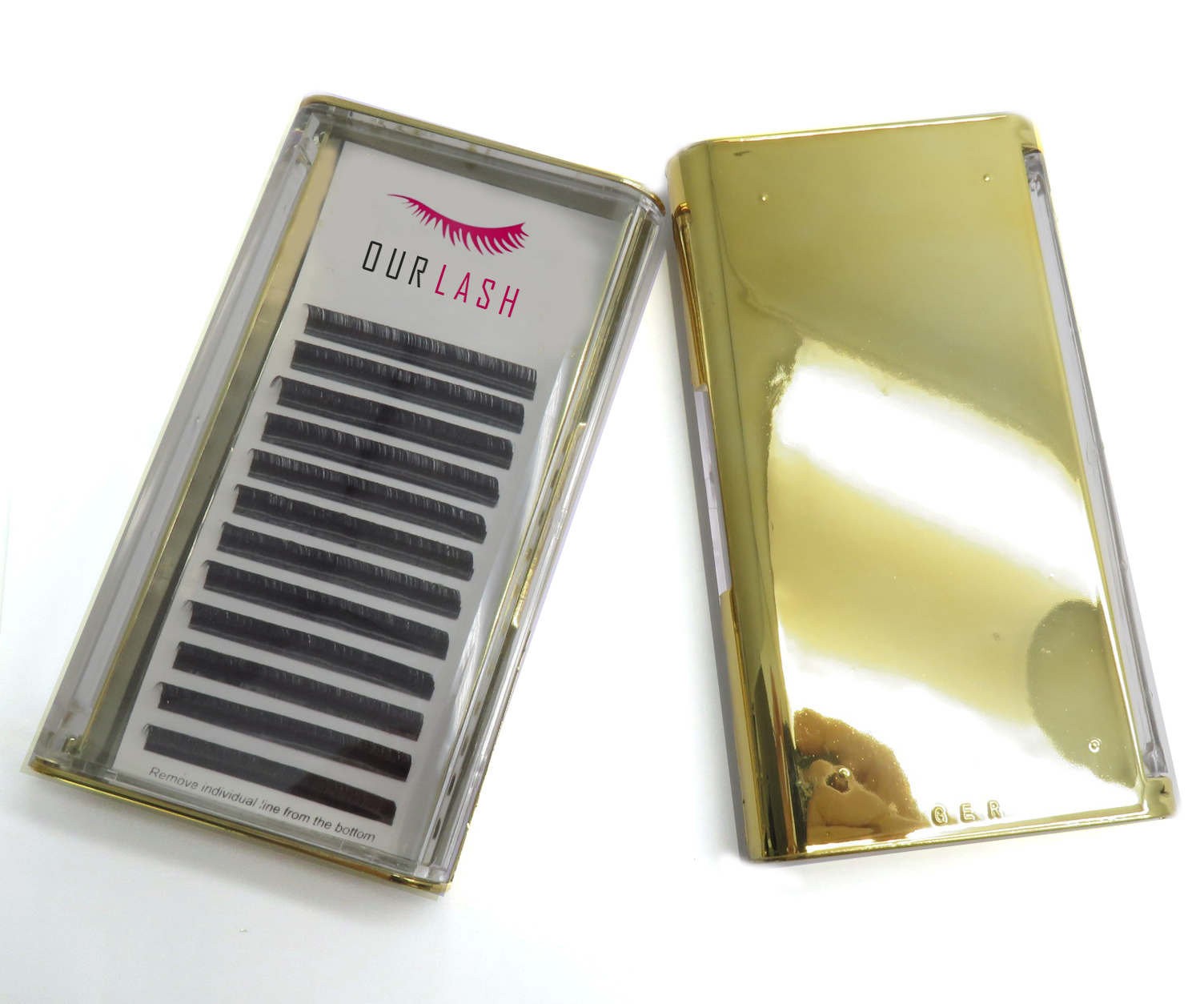
- Packaging:Beyond the logo, check the box construction. Cheap kits crush in transit, and crushed boxes mean damaged clusters and refunds.
Samples should arrive in 3–7 days and usually cost you only the shipping. If a supplier hesitates on sending samples, that tells you everything.
MOQ, pricing, and the real cost of private label
Numbers vary by factory, but here’s what the 2026 market looks like based on current supplier listings:
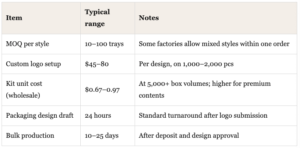
Two budgeting traps to avoid. First, don’t let a low MOQ seduce you into ordering twenty styles at 10 trays each — you’ll pay setup costs over and over and get worse per-unit pricing. Pick 2–3 hero SKUs and go deeper. Second, budget for packaging design time. Between logo drafting, mock-up approval and printing, add a couple of weeks to your timeline that most first-timers forget.
How to verify your supplier isn’t a middleman
Here’s a number that should make you pause: a 2025 audit found 78% of “verified” suppliers on major B2B platforms are actually trading companies, not factories. A trading company can absolutely fulfill an order — but you’ll pay a 15–35% markup, and when the bond fails in month two, they can’t fix the chemistry because they don’t control production.
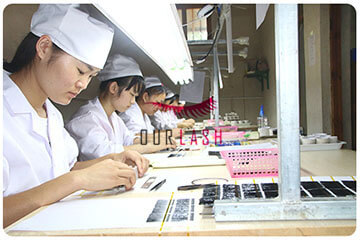
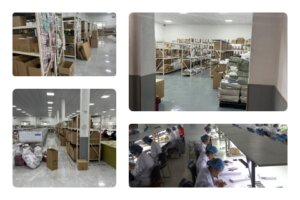
Ask for a video walkthrough of the production line with your logo on a piece of paper in frame. Ask which specific adhesive they use and whether they can adjust the formulation. Ask for their business license and cross-check the registered address against what they claim. Then run a trial order before your main volume — a small first order is the cheapest insurance you’ll ever buy. For a full framework on factory vs. trading company verification, our guide on how to choose a lash vendor in China walks through it step by step.
Common mistakes wholesalers make on their first kit order
- Judging on unit price alone.The cheapest kit on the platform is using the cheapest bond. You’ll discover that in the returns column, not on the invoice.
- Skipping wear-testing the bond.Clusters you can test in two minutes; the bond needs a full wear cycle. Test it for five days before committing.
- Treating the instructions as an afterthought.Your product is the whole experience, and instructions are half of it for a beginner buyer.
- Not confirming the design timeline.Logo approval plus printing plus production adds up. Lock the schedule in writing before you pay the deposit.
FAQ
Q: What’s the MOQ for DIY lash kits?
Typically 10–100 trays per style, depending on the factory and whether you’re doing custom packaging. Some suppliers allow mixed styles within a single order. OURLASH offers flexible starting quantities with custom kit assembly — message us for specifics.
Q: Can I put my own logo and packaging on the kits?
Yes. That’s the standard private label model. You send your logo, the factory drafts a design (usually within 24 hours), you approve, and it goes to print on your bulk order. Setup runs roughly $45–80 depending on print quantities.
Q: How much does a DIY lash kit cost wholesale?
In 2026, expect $0.67–0.97 per kit at 5,000+ box volumes, before custom packaging and shipping. Premium kits with better bond, more clusters and branded tools land higher — and support higher retail price points.
Q: How long does production take?
Samples ship in 3–7 days. Bulk production runs 10–25 days after deposit and design approval. Add 2–3 weeks for custom packaging design and printing if you’re starting from scratch.
Q: What’s the difference between DIY kits and regular lash trays?
A tray is just lashes. A kit bundles clusters, bond, sealant, tools and instructions into a complete at-home system — higher value, higher price point, and a consumable repurchase cycle. Kits also target a different buyer: brand-builders rather than salons.
Ready to build your own DIY lash kit brand?
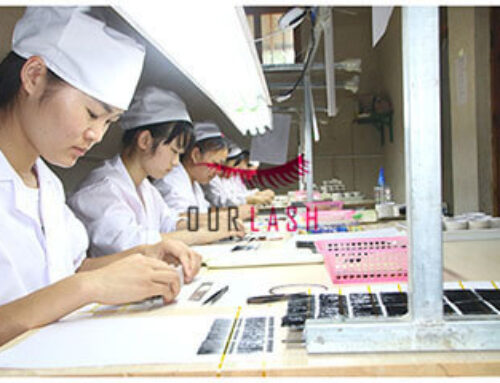
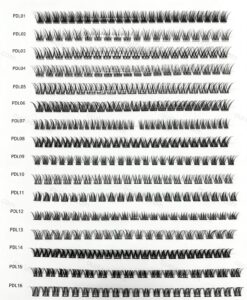
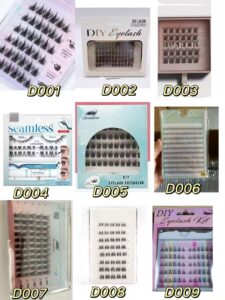
OURLASH has manufactured eyelash extensions and cluster lashes for 14 years from our factory in Qingdao, China. We’re a direct manufacturer — not a trading company — with in-house production, dedicated QC, and private label packaging support. Our DIY lash kits and pre-glued cluster lashes PDL01-PDL16 can be fully customized with your branding.