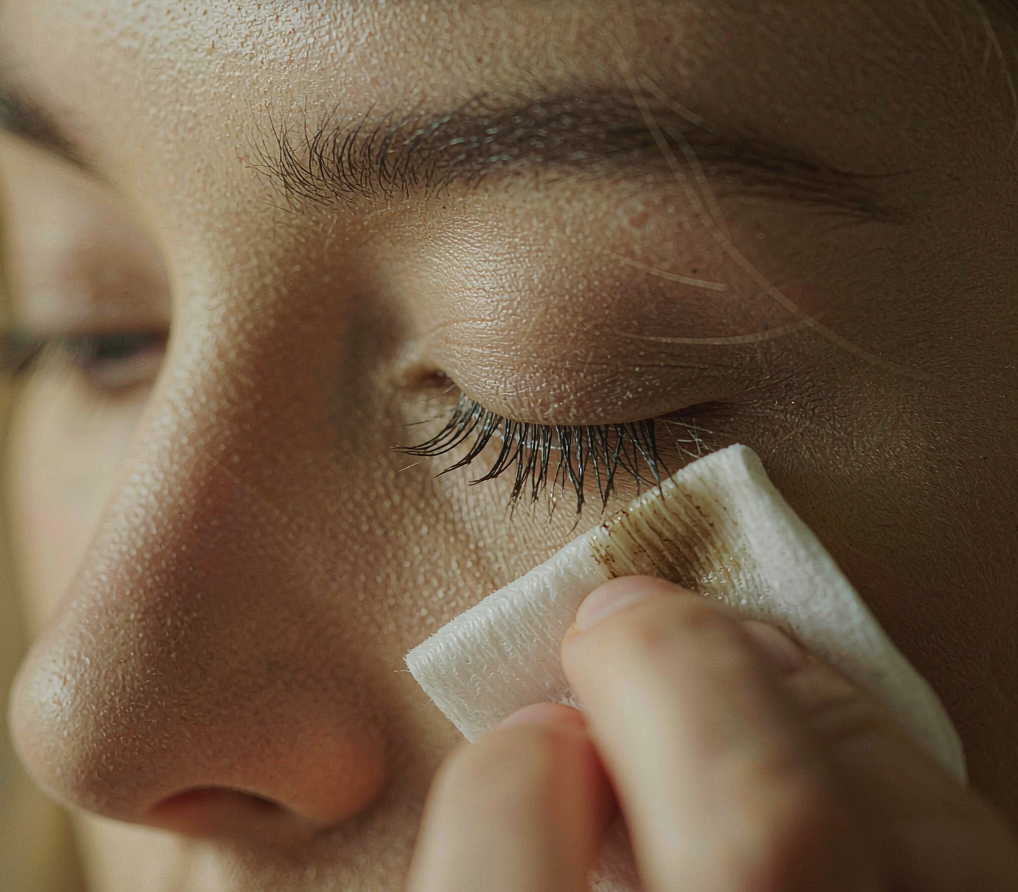
Nobody warns you about removal. The tutorials cover application in loving detail — placement maps, bond amounts, clamp times — and then end with “when you’re ready, gently remove.” Gently how? With what? After how long?
The gap matters. Ask any lash tech what actually breaks clients’ natural lashes and you won’t hear “bad bond” or “cheap clusters.” You’ll hear the same story over and over: someone got impatient, found a lifting edge, and pulled a cluster off dry — taking three or four natural lashes with it. The adhesive is rarely the villain. The removal is.
Here’s the method that keeps your natural lashes on your lids, written from the factory side of the industry.
Why Removal Is Where the Damage Happens
Your natural lashes are already in a constant cycle of falling out and regrowing. Each lash grows for about 30–45 days, rests, sheds, and gets replaced. On any given day you lose 1–5 natural lashes per eye without noticing — which is exactly why salon fills exist.
A cluster is bonded to 8–15 of those lashes at once. When you pull a bonded cluster off dry, you don’t overcome the adhesive — you overcome whichever is weaker: the glue joint, or the lash root. A proper bond, even a gentle DIY bond-and-seal formula, usually wins. The lash root loses. Pulled lashes don’t grow back on schedule; a traumatized follicle can take up to 8–12 weeks to produce a replacement, and repeatedly yanked follicles can stop producing altogether.
The entire game of safe removal is making the adhesive weaker than the root before you touch anything. You do that with a solvent, and you give it time to work.
What You Need Before Starting
Nothing on this list is expensive, and every item earns its place:
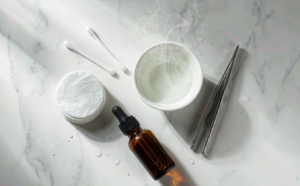
- An oil-based remover.A dedicated lash extension remover (the kind that comes in a small bottle with a brush) works fastest. In a pinch, coconut oil, olive oil, or a cleansing balm will do the same job, just slower.
- Cotton pads or cotton swabs.Swabs give you more control along the lash line.
- A bowl of warm water and a gentle cleanserfor after.
- Tweezers — optional, and only for lifting an edge.If you need tweezers for pulling, you’ve skipped a step.
- Fifteen unhurried minutes. Not five minutes before you need to leave the house.
One thing you don’t need: force. If anything in the process below requires a firm pull, stop and add more remover instead.
The Safe Removal Method, Step by Step
This works for bond-and-seal clusters, and with a shorter soak for pre-glued clusters.
Step 1: Never remove lashes dry
Dry removal is the number one cause of lash loss, full stop. If you remember one sentence from this article, make it this one. The cluster can wait; your lashes can’t be un-pulled.
Step 2: Saturate the base with remover
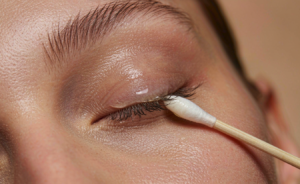
Dip a cotton swab in your oil-based remover and coat the cluster bases along the lash line — get the product onto the bond itself, not just the lashes above it. Work one eye at a time. Close the eye and let the swab sit against the base for a moment so the solvent soaks in rather than smearing around.
Step 3: Wait 60–90 seconds. Actually wait
This is where nearly everyone fails. The solvent needs time to break the bond down; 60–90 seconds is typical for a dedicated remover, 2–3 minutes for plain oil. Use the time to saturate the other eye. When the adhesive is properly dissolved, the cluster doesn’t come off with a tug — it slides.
Step 4: Let the cluster slide off — from the outer corner
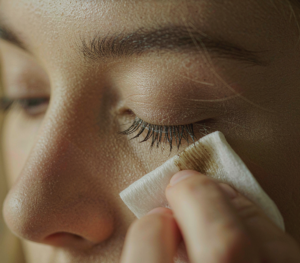
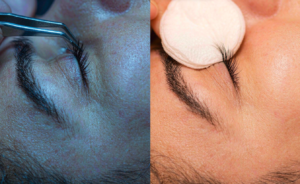
Take a fresh cotton pad, press it gently against your lid just above the lashes, and wipe slowly downward and outward, from the outer corner toward the temple. Dissolved clusters should release onto the pad. If a cluster holds on, it isn’t dissolved yet — repeat Step 3 on that spot. You can use tweezers to lift a stubborn edge so remover reaches underneath, but the moment you feel genuine resistance, back off and soak again.
Step 5: Cleanse and re-hydrate
Once every cluster is off, wash the eye area with a gentle cleanser and warm water to remove oil residue. Then skip mascara and eye makeup for a day if you can, and let your natural lashes breathe. A swipe of castor oil or a lash conditioner at night is fine — the follicles just survived a solvent bath; a little kindness goes a long way.
Different Formats, Different Removal Rules
Not all clusters come off the same way. If you read our pre-glued vs regular cluster comparison, you already know the formats behave differently in wear — they behave differently in removal too.
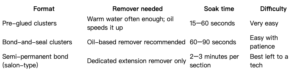
Pre-glued clusters are designed to release the same day, so warm water in the shower plus a gentle downward wipe usually finishes the job. If you added extra bond on top of pre-glued bases, treat them as bond-and-seal and use oil.
If you applied clusters with a semi-permanent adhesive meant for salon extensions, removal is a different job. Those adhesives resist oil and moisture for weeks; kitchen coconut oil barely dents them. A professional removal costs $20–$40. Ripping out a DIY removal with the wrong solvent costs you lashes worth far more. We cover where salon work and DIY clusters sit on the price spectrum in our extensions cost breakdown.
The Five Mistakes That Pull Out Lashes
- Pulling a lifting edge.A cluster lifting at one corner means the bond broke there — not everywhere. Pulling that corner loads the full force onto the lashes still attached. Soak it instead.
- Soaking in the shower and immediately wiping.Steam helps, but water alone doesn’t dissolve bond. This combo works for pre-glued only.
- Using makeup remover wipes and calling it done.Most wipes carry too little oil to break a bond, so people scrub harder — friction plus a half-dissolved bond is how lashes get lost.
- Sleeping in clusters past their window.Overnight friction against the pillow loosens clusters unevenly, and morning removal then deals with a half-bonded mess. Bond-and-seal sets are the exception — they’re built for multi-day wear — but a same-day pre-glued set worn two days is just asking for a rough removal.
- Ripping clusters off “because it never hurt before.”Lash roots don’t send pain signals the way skin does. No pain does not mean no damage. By the time you notice thinning — usually 3–4 weeks later when the gaps show — the pulled lashes are already deep in their regrowth cycle.
What About Wear Time? When Should You Remove Them?
Removal timing depends on the format:
- Pre-glued clusters:remove the same day. They’re engineered for one-day hold.
- Bond-and-seal clusters:5–7 days is the realistic window. Past day seven, regrowth pushes clusters out of position and the bond gets stubborn.
- Anything that starts itching, burning, or swelling:remove immediately. Irritation means the adhesive isn’t agreeing with you, and no look is worth a week of puffy lids.
Application technique also determines how easily removal goes later — clusters placed on the skin rather than the lashes detach differently. Our home application guide covers placement properly so removal stays a five-minute job.
For Lash Brands: Removal Is a Product Decision, Too
If you sell cluster lashes under your own label, here’s the uncomfortable commercial truth: a customer who damages her lashes during removal doesn’t blame her technique — she blames your product. In our customer service data across private label brands, “ruined my lashes” complaints cluster around removal almost exclusively, regardless of how well the bond performed during wear.
The brands that avoid this do three things well. They include or upsell a remover with bond-and-seal kits, because a matched solvent removes cleanly where generic oil fails. They print the soak time on the packaging — 60–90 seconds — instead of “gently remove.” And they ship a one-card removal guide in every order, which costs cents and eliminates the single biggest driver of returns and one-star reviews in the category.
On the sourcing side, ask your factory how their bond performs in oil-based removal testing. A well-formulated bond should hold through a week of showers yet release fully after a 90-second oil soak — that balance is a formulation choice, not luck. We test every bond formula this way before it goes into production. If you’re evaluating suppliers, our vendor selection guide lists the questions worth asking, and our cluster lashes wholesale guide covers formats, pricing, and private label options in detail.
Quick Answers
Q: Can I just use coconut oil from my kitchen?
Yes, for bond-and-seal clusters and pre-glued. It works — just slower than a dedicated remover, so budget 2–3 minutes of soak time and a second application for stubborn spots. Don’t use it on salon extension adhesive; it won’t break that bond down properly.
Q: My cluster is half off. Should I pull it?
No. Soak the still-attached side for another 60 seconds and wipe downward again. A half-attached cluster always surrenders to enough solvent. It never surrenders safely to force.
Q: How do I know if I actually damaged my lashes?
Losing a few lashes at removal is normal — 1–5 shed naturally per day anyway. Worrying territory is visible gaps, or clusters coming off with 4+ natural lashes rooted in them. Gaps refill over 8–12 weeks; leave the area alone until they do.
Q: Does oil remove clusters but also weaken future wear?
Only if you don’t cleanse afterward. Oil residue on your lashes breaks the next set’s bond within hours. Wash with a gentle cleanser before your next application and wear time recovers fully.
Q: Can I reuse clusters after oil removal?
Pre-glued, no — the factory adhesive is spent. Bond-and-seal clusters, sometimes: rinse off the dissolved bond, let them dry on a tissue, and reuse once or twice. Fiber quality determines whether they survive a cleaning, which is one reason B2B buyers should care about material specs, not just photos.
The Bottom Line
Safe removal isn’t a technique so much as a temperament. The solvent does the actual work — your only job is to give it time and refuse to pull. Sixty seconds of patience versus eight weeks of regrowth is the easiest trade in beauty.
Soak, wait, slide, cleanse. Your natural lashes will thank you by still being there in the morning.
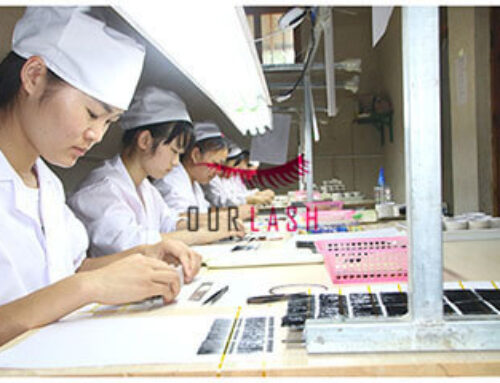
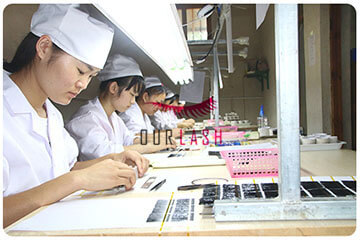
OURLASH manufactures pre-glued and bond-and-seal cluster lashes from our factory in Qingdao, China — 14 years of production experience, oil-removal tested bond formulas, and private label options with custom removal guides at every volume.