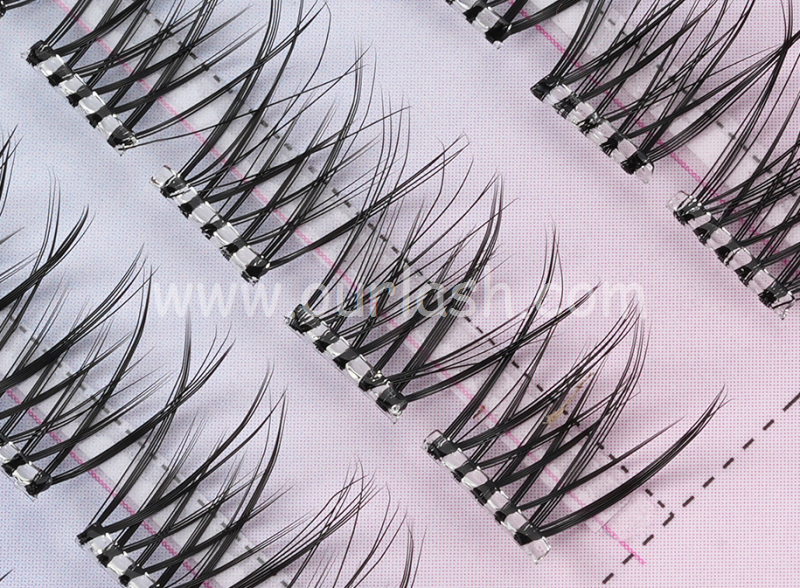
Short answer: cluster lashes “keep falling off” almost never happens for one reason. It’s a specific failure in one of five places — application, bond amount, oil exposure, your natural lash cycle, or a base-to-lash length mismatch. Diagnose which one is yours in the next 90 seconds. Find your row in the table below. The fixes work; the diagnosis is what most guides skip.
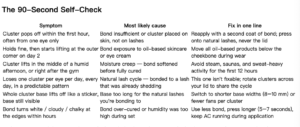
Find your row. Read the rest of this article through that lens. The fixes work; the diagnosis is what most guides skip.
Cause #1: The Cluster Is Sitting on Skin, Not on Lashes
This is the silent killer of cluster lashes, and it explains roughly half the “won’t stay on” complaints we see in customer service tickets. A cluster applied to the eyelid skin sits on a moving, oily, flexible surface. Every blink pulls at it. Within an hour, the bond has nowhere to anchor, and the cluster lifts.
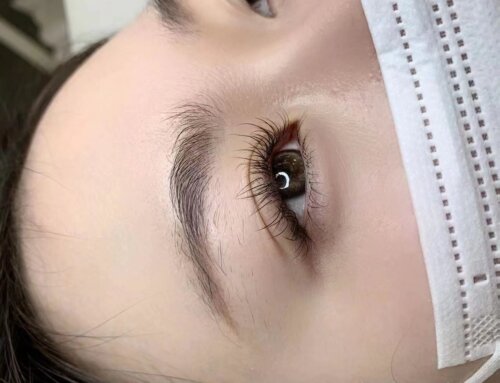
The cluster is meant to wrap around the natural lashes, not glue onto the lid above them. Test: after a fresh application, gently tug a single natural lash outward. The cluster should move with it. If the natural lash slides out and the cluster stays put, you glued to skin. Strip it, clean the lid, and start over. We go through placement step-by-step in our home application guide.
Cause #2: Bond — Too Little, or Piled On Wrong
Bond is the cheapest part of the kit and the part people least respect. Two opposite mistakes, same result.
Too little bond means the cluster has nothing to grip. A bond-and-seal set needs a thin but complete layer on both the cluster base and the natural lashes. Too much bond takes longer to cure, slips around while wet, and tends to “bloom” past the base — leaving a cloudy white halo that breaks off in chunks. Most kits recommend a single thin stripe on the underside of the cluster base, not a thick dollop. Real number: kits sold to private-label clients in our factory ship with 5–8 grams of bond per 80-segment tray — enough for 4–6 full applications. If a kit ships 2 grams, the manufacturer didn’t trust you to use it sparingly, which usually means the formulation is fussy.
Cause #3: Oil-Based Skincare and Eye Cream
Oil dissolves bond. Not “softens” or “weakens” — dissolves. The bond-and-seal formula we manufacture uses a water-resistant acrylate base precisely because oil-based cleansers and eye creams are the most common accidental solvent in a customer’s routine. Most people apply retinol, vitamin C serum, or eye cream in the morning before makeup — and the residue sits along the lash line all day.
The rule: keep all oil-based products below the cheekbone during the wear window — eye cream, foundation or concealer formulated with oils, lip balm (if it migrates upward when you sleep), night serums near the orbital bone, and oil-based makeup remover (use micellar water during wear). Anything with dimethicone high up on the ingredient list, squalane, or coconut oil will shorten bond wear by 1–3 days in our customer service data.
Cause #4: The Natural Lash Cycle, Not the Product
Each natural lash lives roughly 30–45 days before it sheds. You lose 1–5 per eye per day, normally. A cluster is bonded to 8–15 of those natural lashes at once. When a few shed mid-week, the cluster loses anchor points and loosens from the inside out — even if you never touched it.
This isn’t a product failure. It’s biology on schedule. Cycle loss looks like one cluster dropping every 24–48 hours, base still attached to a natural lash root. Product failure looks different: multiple clusters lifting in one sitting, sticky residue left behind, bond never fully cured. If you’re seeing cycle loss, the answer isn’t to buy stronger bond. The answer is to space clusters so no single one carries too much load. The wear timeline guide goes deeper into how daily drop-off maps onto the cycle. If you’re using pre-glued clusters, the framing is different — those are designed to release at the end of one day, so “falling off” with pre-glued on day two means you needed a different format, not a better application. The format comparison guide covers which format to pick for which day-count goal.
Cause #5: Base Length Doesn’t Match Your Natural Lashes
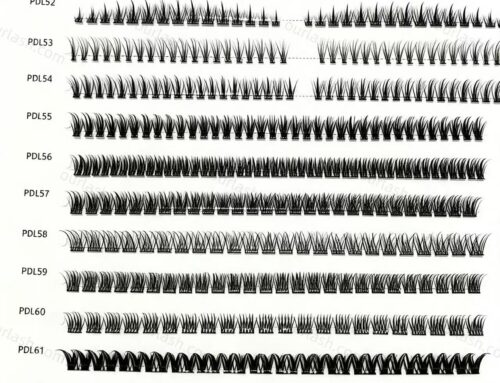
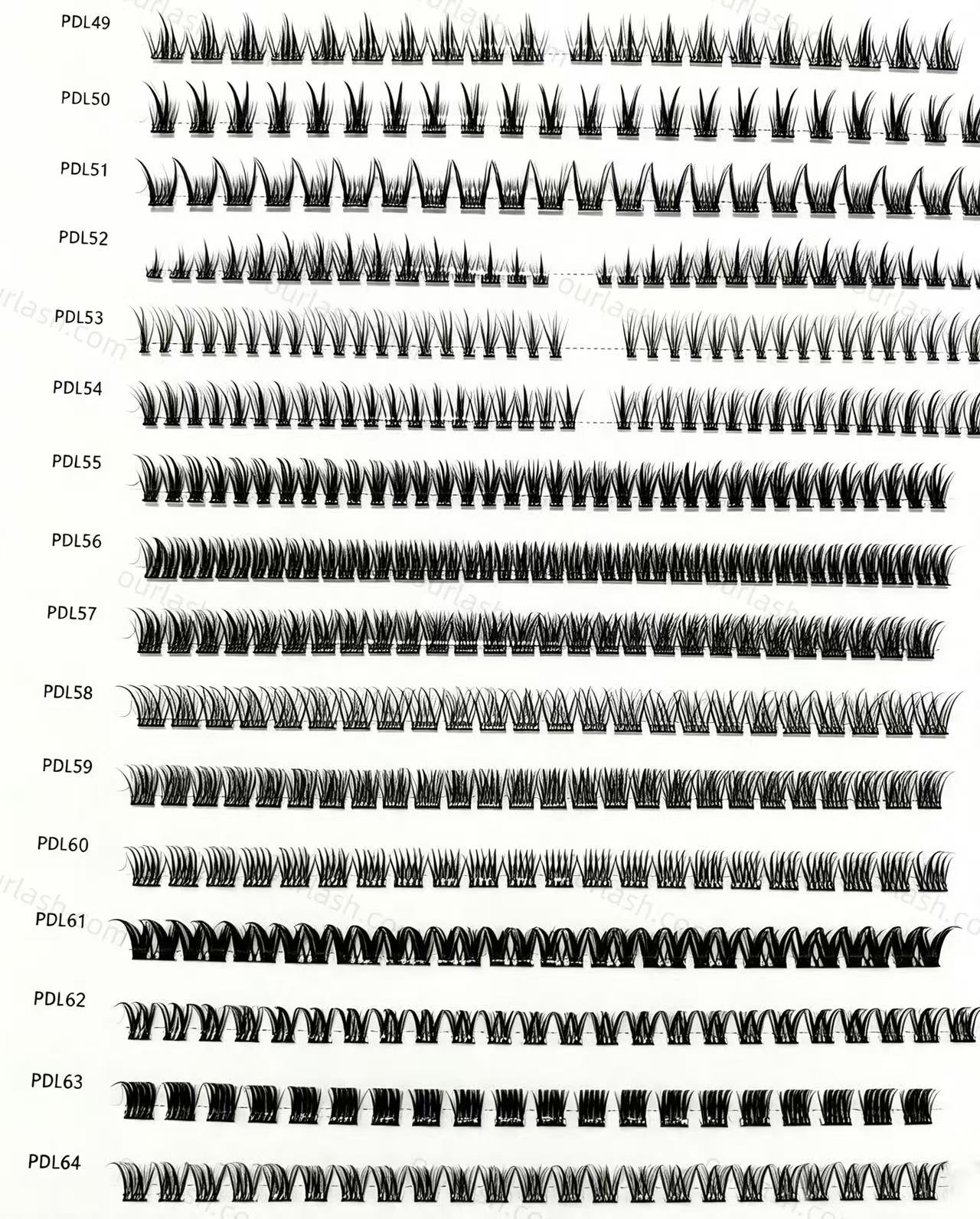
Cluster bases come in widths — typically 8, 10, 12, and 14 mm. The wider the base, the more natural lashes the cluster spans. That sounds like more contact = more hold, but it works the opposite way. A 14 mm base bonded to short, sparse lashes has to arch over a gap or bridge two clusters’ worth of natural lashes. That bridge flexes with every blink. Flex creates lift. Lift becomes fall-off.
The fit: base should sit on dense natural lashes only. If yours are thin or short, switch to 8–10 mm or pick clusters with fewer fans per band. Brands that sell “one size fits all” usually default to a 12 mm base — wrong for roughly half the customers. The honest lash vendor offers a base-width range and lets you sample. Our vendor selection guide covers what “honest” looks like in wholesale.
The Five Habits That Fix Most “Falling Off” Complaints
None of these are expensive. Press each cluster for a counted 5–7 seconds (under five = partial cure, over ten = skin-over before grip). Move all oil-based skincare below the cheekbone. Avoid steam for the first 12 hours. Use 4–6 clusters per eye so each cluster is bonded to fewer natural lashes — cycle-related drops won’t pull the whole set down. Switch base width to match your natural lash length: short → 8–10 mm, medium → 10–12 mm, long and dense → 12–14 mm. Combined, these take a typical 3-day wear up to 5–6 days, the realistic maximum for bond-and-seal.
FAQ
Q: Is it normal to lose 1–2 clusters per day with bond-and-seal?
Mostly yes. You lose 1–5 natural lashes per eye per day, so losing one cluster per day means your bond application is thin or your base width is too long. Both fixable.
Q: Will stronger bond make my clusters stay on longer?
No. More bond slows the cure, causes slippage, and creates a white residue that breaks off in chunks. The cure is in how you apply the cluster and how your day treats it.
Q: Why does only one eye fall off early?
Asymmetric placement — one eye gets tighter application or better bond coverage. Practice, not product.
Q: Should I seal the top of the bond with sealant?
Yes — sealant locks the bond against oil and moisture. Skip the seal and you lose 1–2 days of wear on average. Bond + seal is the system. Removing either piece breaks it.
Q: Can I reuse a cluster that fell off?
Only if the base is intact and the cluster wasn’t stretched out of shape. Most clusters are reusable 1–3 times if you treat them gently. Our DIY kit guide covers cleaning and storage.
When the Product Actually Is the Problem
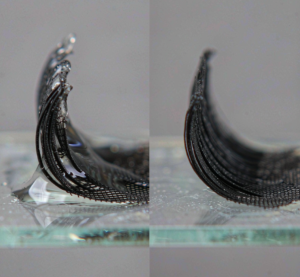
Most failures above are user-side and fixable. Three signs mean the cluster itself is at fault: the base sheds individual fibers (fibers weren’t bonded into the base), the bond never cures past tacky (formula gone bad or stored in heat), or the base visibly curls away from the natural lashes the moment you apply it (industrial design problem). All three happen with sub-tier manufacturing and almost never with established factories running proper QC. If you’re seeing this regularly through a brand, the issue is upstream. Our wholesale guide walks through what to ask a vendor, and the private label guide covers how to spot factory-side quality issues before they hit your shelf.
If your symptom isn’t in this list and the cluster is leaving residue, fibers, or visible base defects — that’s a product issue, not yours. Send a sample back to the brand and ask for a replacement from a different production batch.
The Factory View: Why We Track These Patterns
From the wholesale side, “clusters keep falling off” complaints cluster into two camps — first-time buyers who placed wrong, and repeat buyers whose routine quietly changed (new eye cream, new climate, new workout). What the factory can control is shipping product where the variables are predictable: bond formula with a consistent cure window, base widths that match what the brand claims, and cluster bases that don’t curl off the natural lashes under standard conditions. Our wholesale pricing guide and cost breakdown guide cover the production-line variables that map to user-side complaints.
What to Try Tonight
Take a baseline photo at hour 0, hour 6, and hour 24. Press each cluster for a counted 5–7 seconds; move all oil-based skincare below the cheekbone; skip shower steam for the first 12 hours. If you still see early lift, switch to a narrower base width next application. If you still see early lift after that, the cluster product is the issue — ask your vendor for a refund or replacement batch.
Want a free sample of bond-and-seal clusters from a factory that tracks these patterns? Send us your target spec. Looking for the full product line instead? Browse the cluster catalog.