China produces more false eyelashes than anywhere else in the world. The supply chain is deep, the pricing is competitive, and the range of styles is unmatched. But that scale hides a problem: for every legitimate factory with years of production experience and in-house quality control, there are roughly ten trading companies that have never operated a production line but call themselves a “manufacturer.” A 2025 SourcifyChina audit found that 78% of “verified” suppliers on major B2B platforms are actually trading companies, not factories. Getting this decision right determines whether you build a brand or burn through inventory. This guide covers how to tell a real factory from a middleman, which red flags should make you walk away immediately, and how to vet vendors so your first bulk order is not your last mistake.
Factory vs. Trading Company: Why This Distinction Changes Everything
The difference between buying from a factory and a trading company is about control. With a factory, pricing is material + labor + overhead — you can request a bill of materials and speak directly with the production manager. With a trading company, a 15–35% markup is baked into every unit, and when quality issues arise, their only move is to forward your complaint to someone else.
So how do you tell them apart? Here are the most reliable indicators:
- Check the business license.In China, the business license (营业执照) explicitly states the company’s scope of operation. Manufacturing licenses list “false eyelash production” (假睫毛生产) or “cosmetic manufacturing” (化妆品生产). Trading licenses list “import/export” or “distribution.” Always ask for the license and cross-check the address.
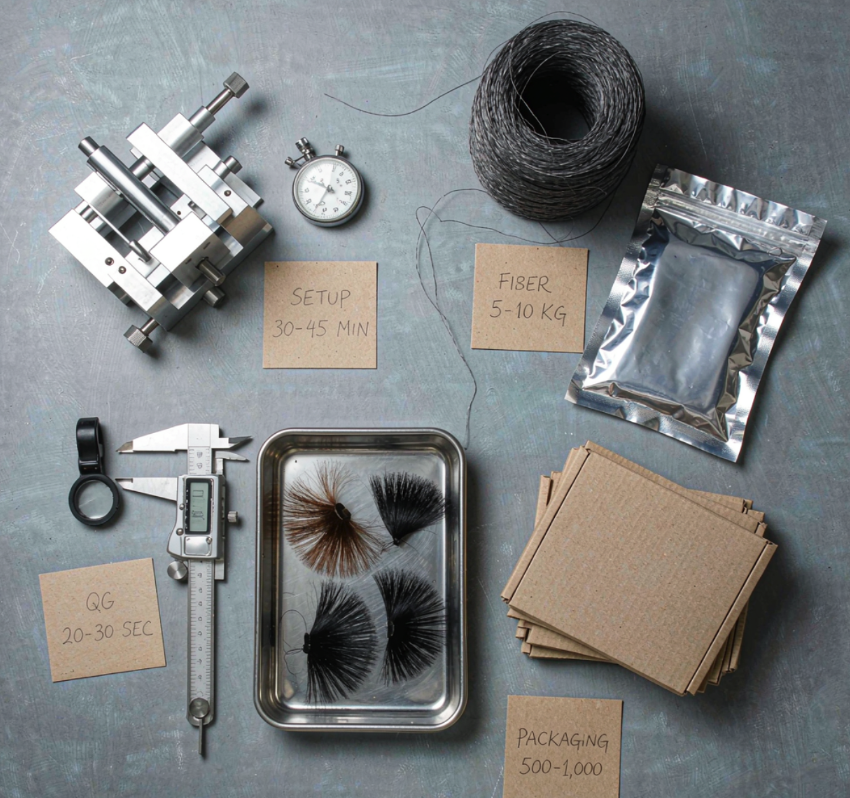
- Ask about machine specifications.A real factory owns lash bonding machines, fiber-cutting equipment, and packaging lines. Ask: “What model of curling machine do you use?” or “Can I see the maintenance log for your fiber extrusion line?” A trading company cannot answer these questions because they have never operated the equipment.
- Request to speak with the QC lead or production manager.Trading companies assign sales staff to handle all communication. A factory can connect you with the person who runs the quality control station — even if that person only speaks Chinese. If the supplier refuses to let you speak with anyone outside the sales team, you are dealing with a middleman.
Seven Red Flags That Should End a Vendor Conversation Immediately
Some warning signs are subtle. Others are deal-breakers on the spot. Here are seven that should cause you to walk away without a second thought:
- Prices dramatically below market average.If four suppliers quote similar prices and one is 40–60% lower, you are looking at substandard fiber, non-sterile adhesive, or synthetic material labeled as PBT. 68% of quality failures trace back to unverified raw materials(SourcifyChina 2025). Cheap input equals expensive returns.
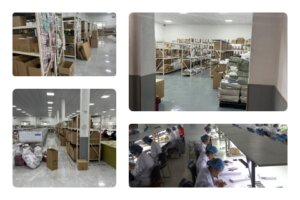
- Refusal to share a physical factory address.A legitimate manufacturer is proud of their facility. If a supplier will not give you a street address — or the address they give leads to a commercial office building on Google Earth — disqualify them.
- Stock photos or generic catalog images.If the product photos on their website or Alibaba store look identical to images used by five other suppliers, those photos were not taken in their facility. Request real-time photos or a short video of current production. A factory can provide this in minutes.
- Pressure for 100% upfront payment.The standard payment structure for legitimate Chinese manufacturers is T/T: 30% deposit to start production, 70% before shipment(often against a copy of the bill of lading). Anyone demanding full payment upfront — especially through cryptocurrency or wire transfer to a personal account — is either a scam or financially unstable enough to be one.
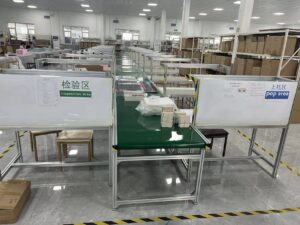
- No quality control documentation.A professional lash factory maintains QC checkpoints: incoming material inspection, in-process curl and adhesion checks, and final AQL sampling. If a supplier cannot describe their QC process beyond “we check everything,” they check nothing.
- Samples shipped from Hong Kong or Singapore.Real factories ship samples directly from mainland China, typically from Guangzhou, Qingdao, or Yiwu — the three major lash manufacturing hubs. If your sample’s tracking number originates in Hong Kong, you are almost certainly dealing with a trading company that is drop-shipping.
- Inconsistent communication.If responses take 5–7 days during the sales process, expect worse after you have paid. Professional manufacturers reply within 24 hours and answer technical questions without needing to “check with the factory” — because they are the factory.
The Five-Step Vendor Vetting Process
Once you have eliminated the obvious red flags, run every remaining candidate through this structured verification process:
Step 1: Request documentation.
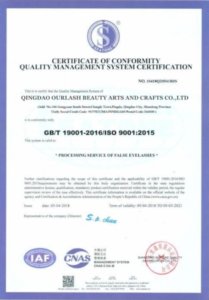
Ask for the business license (with unified social credit code), any relevant certifications (ISO 9001 for quality management, GMP for production hygiene, CE or FDA compliance if exporting to those markets), and material safety data sheets for adhesives. A factory with 5+ years of export experience will have these documents organized and ready — because they have been asked for them hundreds of times.
Step 2: Order and test samples rigorously.
Do not evaluate lashes by looking at them in a tray. Wear them. For cluster lashes, wear them for at least 48 hours and test removal. Check curl retention after the second wear. Apply them to someone else’s lash line to test band comfort on a different eye shape. Order a second sample batch from the same supplier two weeks later and compare — batch-to-batch consistency is the single most reliable predictor of long-term vendor quality.
Step 3: Verify references independently.
Ask for 2–3 verifiable client references. Do not stop at reading the testimonials on their website — contact those clients directly. Ask: “How many orders have you placed with this factory? Have you ever had a quality dispute, and how was it resolved? How consistent was the reorder quality compared to the sample?” These questions reveal more in five minutes than a month of email exchanges with the supplier.
Step 4: Start with a trial order.
Place a small order — 500 to 1,000 units across 3–5 styles — and treat it as a dress rehearsal. Evaluate not just the product quality but the entire experience: communication during production, packaging accuracy, shipping documentation, and delivery time. A supplier that performs well on a small order is far more likely to perform well on a container load.
Quality Control: The Difference Between a Brand and a One-Time Purchase
In the lash business, your customer’s first impression happens in under three seconds — the moment they open the box. That moment determines whether they reorder or return. This is why quality control cannot be an afterthought. Here is what a professional lash vendor’s QC system should include:
- Incoming material inspection:Every batch of PBT fiber or adhesive should be tested before it reaches the production line. Ask for fiber specification sheets per SKU — thickness range, curl type, base construction.
- In-process checks:Curl consistency, band adhesion, and fiber alignment should be checked at multiple points during production, not just at the end.
- Final AQL sampling:The industry standard is AQL 2.5 for major defects and AQL 4.0 for minor defects. If your vendor has never heard of AQL standards, they are not running a professional QC operation.
- Packaging inspection:Trays should release clusters cleanly without tearing. Boxes should survive ecommerce shipping without crushing. Labels should match the SKU inside. This sounds basic, but packaging errors are one of the most common failure points for first-time wholesale buyers.
For private label orders, QC must also verify that branding elements — logo placement, color accuracy, and barcode legibility — match the approved mock-ups. A single misprinted tray can undo months of brand-building work.
The cheapest vendor is rarely the most profitable long-term partner. Pay on time, communicate specifications in writing, and sign an NDA before sharing custom designs. A factory that trusts you will prioritize your production when demand spikes — and that reliability matters more than saving a few cents per unit.
FAQ: Choosing a Lash Vendor in China
How do I know if a lash supplier is a real factory or a trading company?
Ask to see the production line via live video call. A real factory can show you active production within minutes. Check the business license — manufacturing licenses list “false eyelash production” under their scope of operations, while trading companies list “import/export” or “distribution.” Request to speak with the QC lead or production manager; if the supplier refuses, you are dealing with a middleman.
What is a reasonable MOQ for lashes from a Chinese factory?
Standard lash trays typically start at 500–1,000 units per style, while fully customized private label orders may require 1,000–3,000 units depending on packaging complexity. Most reputable factories allow you to mix styles to reach the total MOQ. Be wary of suppliers offering MOQs below 100 units with full customization — this usually indicates a trading company bundling small orders from multiple buyers.
What payment terms should I expect?
The standard in the industry is T/T: 30% deposit to begin production, 70% before shipment (often against a copy of the bill of lading). For first-time orders, consider using paypal. Never pay 100% upfront to a first-time vendor.
How long does production and shipping take?
Production lead times for standard orders range from 15–25 days for small quantities to 20–35 days for larger orders. Custom packaging and private label work add 15–20 days. Shipping by air takes 5–10 days; sea freight takes 20–35 days depending on destination. Always confirm lead times in writing before placing a deposit.
Which city in China is best for lash manufacturing?
The one main lash manufacturing hubs is Qingdao (known for premium and private label production). Qingdao tend to have more experienced factories with stronger quality control systems.
Ready to Partner with a Verified Lash Vendor in China?
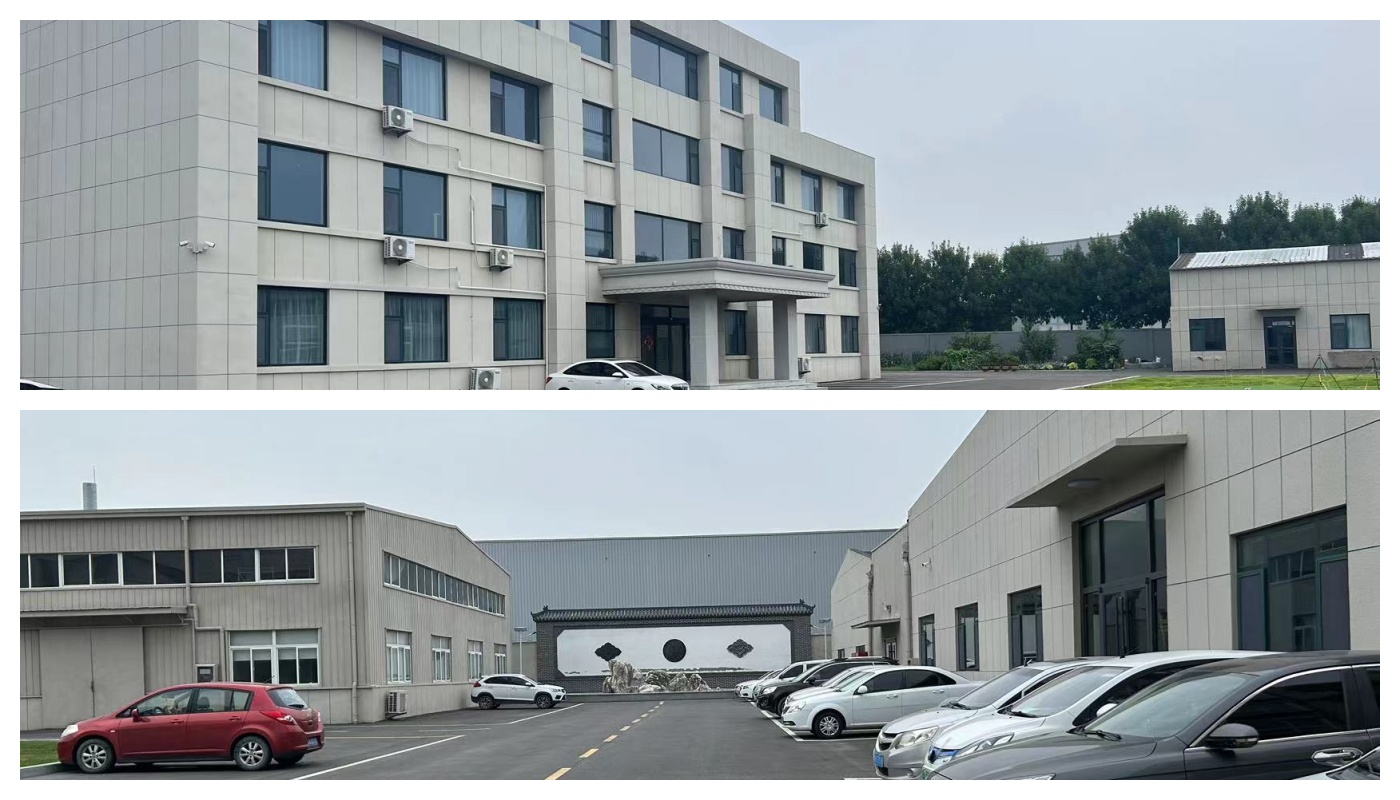
OURLASH has been manufacturing eyelash extensions, cluster lashes, and DIY lash kits for 14 years from our factory in Qingdao, China. We are a direct manufacturer — not a trading company — with in-house production lines, dedicated quality control, and private label packaging capabilities. We export to over 30 countries and support brands at every stage, from sample testing to full-scale production.