Today, OURLASH will talk about where are the eyelash factories located in the world.
The global false eyelash industry has formed a distinct geographical production pattern, with factories concentrated primarily in Asia, particularly in China, Southeast Asian countries, and South Korea. These regions collectively account for 98% of global false eyelash exports, with China dominating the market share. This article explores the key production hubs worldwide, their unique characteristics, competitive advantages, and challenges in this rapidly growing beauty sector.
China: The Global Eyelash Manufacturing Powerhouse
China stands unrivaled as the world’s leading false eyelash producer, with Shandong Province serving as the industry’s epicenter. The small city of Pingdu in Qingdao city of Shandong, known as the “Lash Capital of the World,” produces an astonishing 70% of global false eyelashes and 80% of China’s total output. This remarkable concentration is supported by over 5,000 manufacturing entities and 20,000 processing workshops, creating a fully integrated industrial ecosystem that generates over 10 billion yuan in annual output value.
What sets Pingdu apart is its vertically integrated supply chain covering every production stage from PBT fiber processing to packaging design. Within a 50-kilometer radius, manufacturers can access over 3,000 eyelash styles and all necessary raw materials, specialized glues, and packaging solutions. This geographic concentration reduces comprehensive transaction costs by approximately 30% compared to fragmented production networks.
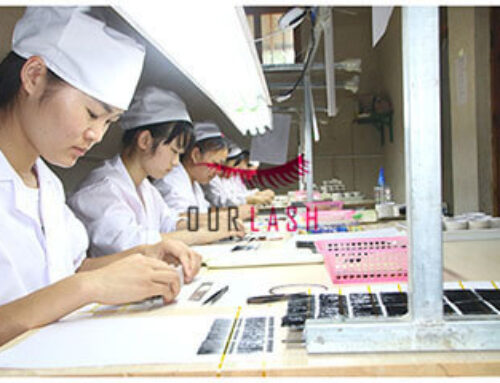
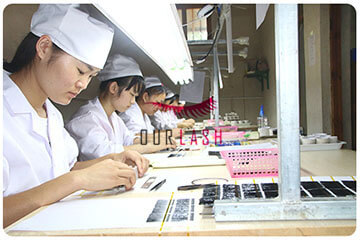
China’s manufacturing advantage extends beyond scale. The industry has cultivated a skilled workforce with decades of expertise, where technicians undergo 6-12 months of rigorous training to master intricate techniques like hand-tied volume fans and customized curling. Quality control standards are exceptionally high, with Chinese factories achieving 98% pass rates for length and curl consistency, significantly outperforming competitors.
Other Chinese production clusters include Guangzhou, Shenzhen, and Dongguan in Guangdong Province, which specialize in high-end and innovative products like self-adhesive lashes and magnetic lashes. These regions benefit from advanced manufacturing infrastructure and proximity to global shipping hubs, enabling rapid delivery to international markets.
Southeast Asia: Emerging Low-Cost Production Hubs
Southeast Asia has emerged as a significant player in false eyelash manufacturing, leveraging competitive labor costs that are 20-30% lower than China’s coastal regions. Vietnam leads the region, accounting for approximately 7% of global exports, followed by Indonesia with 1-2% market share.
Vietnam’s eyelash industry has grown rapidly in recent years, with clusters forming around Ho Chi Minh City and Hanoi. Factories here focus primarily on handmade lashes, capitalizing on the country’s abundant low-wage labor force. Vietnamese manufacturers have established a reputation for producing affordable products, particularly in the mid-to-low-end market segment, where prices are typically 10-15% lower than Chinese equivalents.
Indonesia, Thailand, and Cambodia also host growing eyelash production sectors, primarily serving regional markets and niche segments. These countries benefit from favorable trade agreements; for example, Vietnam’s EU Free Trade Agreement grants tariff advantages for exports to European markets.
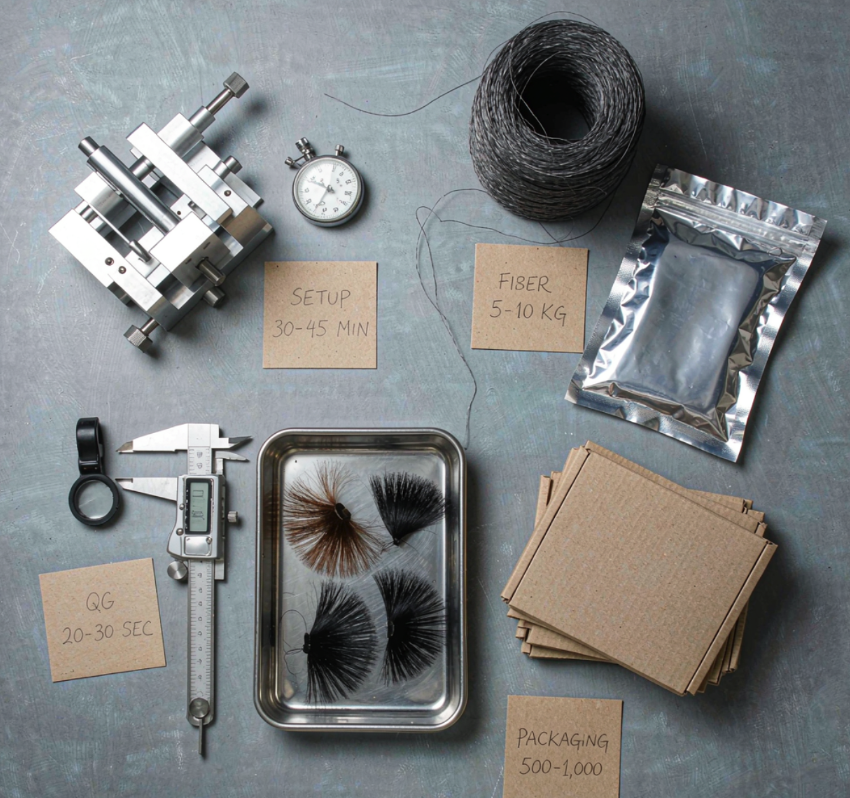
However, Southeast Asian manufacturers face significant challenges. Unlike China’s self-sufficient ecosystem, most regional producers rely heavily on imported raw materials, with PBT fibers typically sourced from China, adhesives from South Korea, and specialized components from other countries. This dependency increases material costs by 15-20% and creates supply chain vulnerabilities, such as the 12-day average delay in raw material deliveries during Vietnam’s 2025 rainy season. Production capacity also lags behind China, with most Southeast Asian factories having monthly outputs of less than 100,000 pairs compared to China’s 500,000-1,000,000 pairs per month.
South Korea: High-Tech Innovation and Premium Production
South Korea occupies a unique position in the global eyelash industry, focusing on high-quality materials, advanced manufacturing techniques, and innovative designs rather than mass production. While South Korea’s overall market share is smaller compared to China and Vietnam, it leads in specialized segments like premium adhesives and raw PBT fibers.
Korean manufacturers are renowned for lightweight, natural-feeling lash designs that align with K-beauty standards, emphasizing sustainability and vegan materials. Brands like Nakocos have established strong reputations among premium beauty brands in Asia and beyond. South Korea also excels in developing specialized lash adhesives that meet strict safety standards while providing exceptional bonding strength.
Most Korean production facilities are located near Seoul and Busan, where they benefit from access to advanced manufacturing technologies and a highly skilled workforce. While labor costs are higher than in China and Southeast Asia, Korean manufacturers compensate through innovation, quality, and brand recognition.
Other Global Production Centers
While Asia dominates global production, smaller manufacturing operations exist in other regions:
Japan: Known for precision manufacturing and high-quality control, Japanese factories produce premium lashes primarily for the domestic market, where per-household cosmetics spending reaches USD 349.75. These products often feature innovative materials and designs tailored to Japanese beauty preferences.
Europe and North America: Production in these regions is limited, with most facilities focusing on small-batch, high-end products or private-label manufacturing for luxury brands. Developed countries primarily serve as consumption markets rather than production hubs, with over 540,000 salons in North America offering lash extension services.
India and Bangladesh: Emerging as niche players, these countries focus on cost-competitive, basic lash styles for regional markets and budget-conscious international buyers.
The Global Production Landscape: Specialization and Complementarity
The global eyelash manufacturing sector has evolved into a specialized ecosystem where different regions focus on distinct market segments:
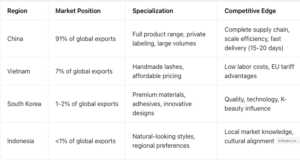
This geographical specialization creates a complementary global production network rather than direct competition in many cases. While China maintains dominance in volume production and complete supply chain capabilities, Southeast Asian countries carve out niches in affordable handmade products, and South Korea leads in premium innovation.
Future Trends in Global Eyelash Manufacturing
The global distribution of eyelash factories is evolving in response to shifting market dynamics:
- China’s industrial upgrade: Pingdu and other Chinese clusters are investing in automation and digital transformation to enhance quality control and production efficiency while maintaining competitive pricing.
- Southeast Asia’s supply chain development: Regional manufacturers are gradually reducing dependency on imported materials by developing local component production, particularly in Vietnam.
- Nearshoring trends: Some Western brands are exploring production in Mexico or Eastern Europe to reduce delivery times and shipping costs to North American and European markets.
- Sustainability focus: All production regions are increasingly adopting eco-friendly materials and manufacturing processes to meet growing consumer demand for sustainable beauty products.
In conclusion, the global false eyelash industry is centered firmly in Asia, with China as the undisputed manufacturing leader, supported by Southeast Asia’s low-cost production and South Korea’s technological innovation. This geographic concentration reflects the industry’s reliance on specialized skills, integrated supply chains, and economies of scale—factors that continue to shape the global distribution of eyelash factories and will likely maintain Asia’s dominance in the foreseeable future.
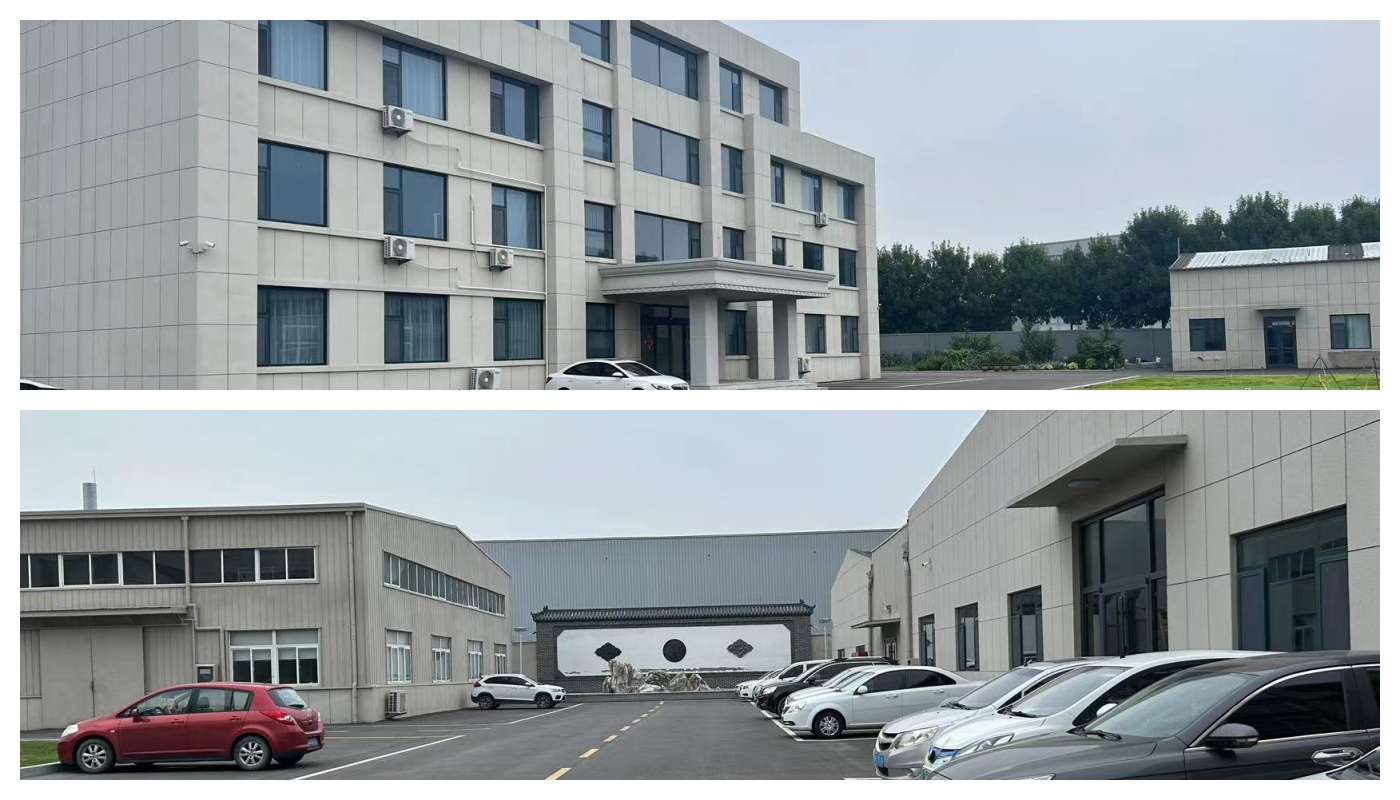
If you are looking for a eyelash factory now, you could contact with us. We located in Pingdu for more than 16 years.